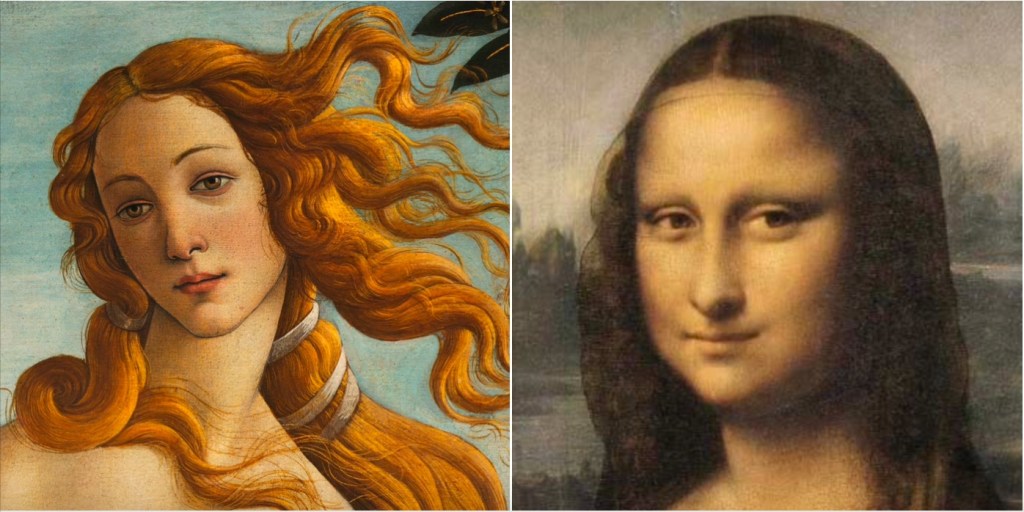
- If an AI can paint the Mona Lisa in 10 seconds, what would you have it paint?
- If an AI could build the Sagrada Familia in one hour, what new structure would you have it build?
- If an AI could write a symphony to the standard of Mozart in one minute, what would you have it compose?
A while ago now, I wrote a post called Art is dead, long live AI. In it, I spelled out how AI works creatively, and gave some practical ways in which we can teach AI skills in art rooms in order to utilise it better. Since then, I’ve seen many artists protest against their copyrighted images being used to train AI. Now, I’ve got no problem with that. Artists should be paid appropriately if their work is being pirated. On the other hand, looking at an artists work and doing your own image in the style of that artist is perfectly good practice. So, I don’t know where you’d draw the line here. Going forward, I believe the artists copyright is still valid, and so the real issue is the loss of potential future revenue due to AI taking away creative opportunities from artists. This is almost certainly happening already and I only see the problem growing rather than declining.
However, I’m reminded of the effects of industrialisation and the invention of the Jacquard loom on Britain’s domestic silk workers. Initially, the Jacquard loom was denounced by workers, who accused it of causing unemployment, but it soon became vital to the industry. In the end, it wasn’t the new loom that spelled the end for Britains silk, but the poor climate, trade wars and silk worm disease.
Does AI spell the end for artists? No, I don’t think it will be as binary as that. Artists will still make their art and AI art will exist alongside, and in competition, with it. Besides, if you were to put an AI engine such Midjourney in the hands of a non-skilled person, I think you’d still get a result that is not as accomplished as you would get if a qualified artist were to do it. The reason I think that is because I know how AI works and isn’t doing any creative thinking as such, it’s processing commands and producing iterations of results based on previously executed, similar outcomes. What is still missing, is the overseer who can examine the outcomes and adapt and modify them in such ways as to make them viable. I know this because I use AI. You don’t get instant, polished results from AI. You get outcomes that need post-production, that need modifications and additional layers, typography, new features adding, and further editing. In short, you need a creative person to manage it. And, if creatives don’t take control of it, we are likely to see a whole host of badly engineered results from non-creatives.
The piano movers problem
There is a particular problem in engineering called the ‘piano movers problem’. It involves moving an awkwardly shaped object through a series of tight doorways and right-angled corridors. The problem is used by robotics motion engineers to study the efficacy of their designs. There have been some studies made by Professor Ofer Feinerman at the Weizmann institute who has compared how groups of humans solve the problem compared to groups of ants. Now, how on earth they got the ants to move ‘H-shaped’ object through the doorways I’ll never know, but the point of the exercise was that ants do especially well at it, even better than humans. The ants’ inferior intellect at an individual level works in their favour when combined into social groups. The multiple superior human brains get in each other’s way when working cooperatively. Too many cooks do indeed spoil the broth. Does this mean we should employ ants to move pianos? No, because moving pianos isn’t only about getting things through doorways. You have to advertise your services, take bookings, drive the van, handle cash and speak to customers. Ants can’t do that.
The ant piano removal firm problem can lead you to at least two conclusions. The first is that you could, as the CEO, save costs and sack your human piano removers and replace them with the cheaper ants. This would allow you to operate the same business at lower costs and perhaps even grow your business with ants doing all the donkey work (or ant work?). In time, there may be no more humans doing piano removals. But, this option is short-sighted in my opinion and leaves a huge open goal of opportunity missed. The question to surely ask is, ‘what could my business achieve if humans and ants worked together to expand my business? How can I train the piano movers to become ant supervisors to move other things besides pianos? What new possibilities are there for us?’
New creative possibilities with AI
Human creativity is perhaps our greatest asset. But if AI can write a novel as good as we can, if it can paint paintings or compose musical scores that are so good we can’t distinguish them from human-made ones, then are we doomed?
Creative humans have to understand that AI is an incredible tool that can do incredible things. The thing to do then, is not to make the same amount of art only now with machines, it’s to expand our horizons and make more art to a higher and better standard using the AI to help us.
So, let’s look back now at the introductory questions:
If an AI can paint the Mona Lisa in 10 seconds, what would you have it paint?
If an AI could build the Sagrada Familia in one hour, what new structure would you have it build?
If an AI could write a symphony to the standard of Mozart in one minute, what would you have it compose?
The key to answering them is obviously in the capacity of our unique imaginations, but also crucial is an awareness and understanding of what it is about them that made them so creatively unique and successful. If you know the pivotal reasons why they were so innovative you are better placed to enable it. If you understand how and why something broke new ground and significantly altered the domain in which it operated, you are more likely to be able to predict and reproduce it yourself.
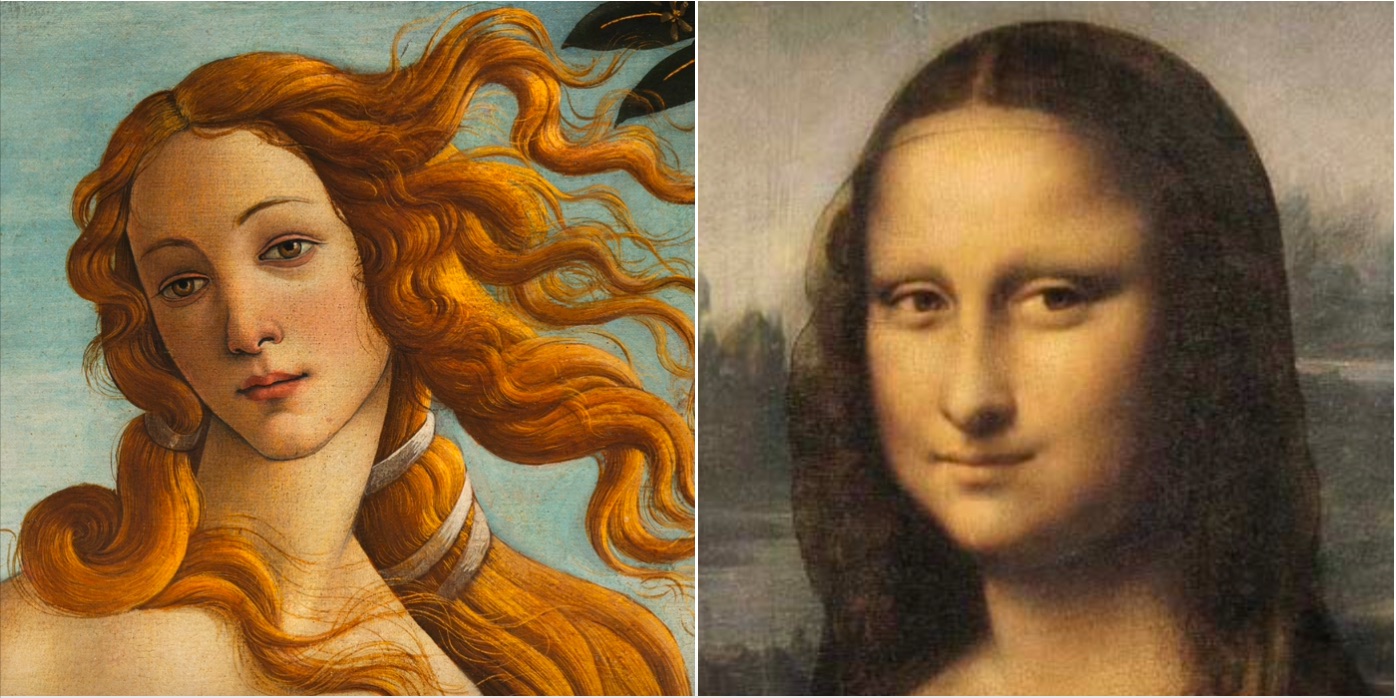
If AI can paint the Mona Lisa in 10 seconds, what would you have it paint?
Leonardo da Vinci was revered in his day as one of the world’s leading artists and yet he didn’t produce a great deal of work, so he was hardly prolific in that sense. So, what was so radical about Leonardo to warrant such acclaim? While he was known as an inventor in his day, especially of military machines, his sketchbooks weren’t known until long after his death and his anatomical knowledge was gained covertly because of its heretical nature. No, what made Leonardo stand head and shoulders above his peers was that his paintings were so much more lifelike than anyone had seen before. Through meticulous study and practice, he had achieved new insights into the use the sfumato technique – the subtle application of consecutive layers of paint to blend tonal areas. Examine Botticelli’s Venus painting from the generation before Leonardo, and you see hard edged facial features and an almost cartoon-like appearance. Compare it to the Mona Lisa, painted around forty years later, and you see soft, moulded features that look so realistic you could almost touch them. Yes, he developed perspective techniques, yes he was a master of chiaroscuro (light and shade), but it was that sfumato modelling that astonished people so much it moved Popes, kings and noblemen to seek him out.
The big question I asked was, if your AI could paint the Mona Lisa in ten seconds, what would you have it paint? Would you paint an interior space, such as Michelangelo’s Sistine Chapel? Or a tender portrait of a loved one? Perhaps you’d decorate a public space to commemorate fallen heroes, or adorn hospital wards to brighten the lives of sick people. But here’s the thing, whatever wonderful work the AI produces will be unlikely to ever change the creative domain without also altering it some new way. Just merely painting a slick painting will not suffice. You are trying to achieve something unique, that a human artist either cannot do, or has not perceived.
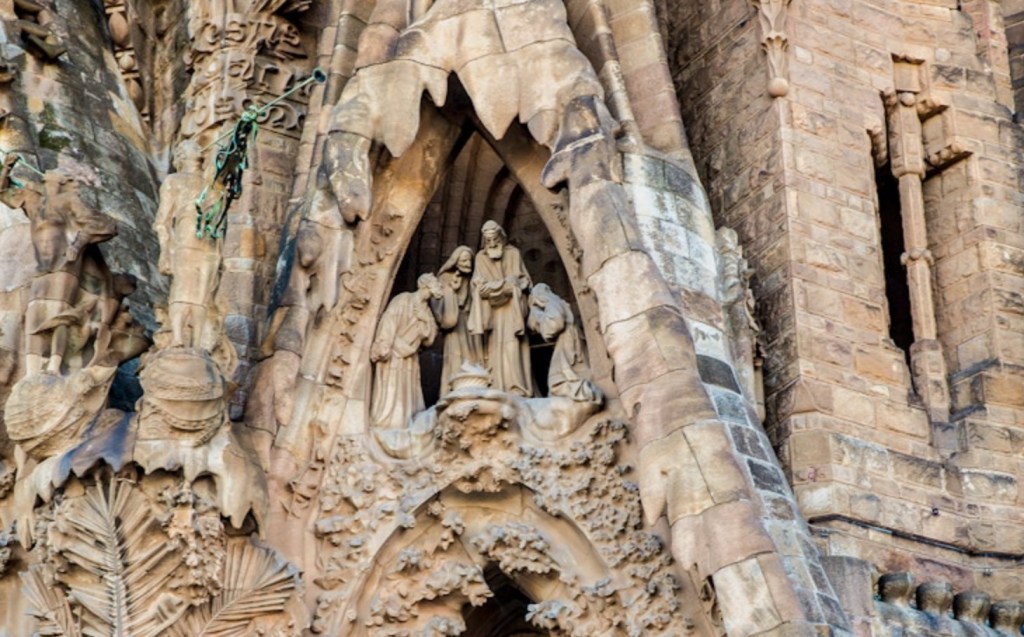
If AI could build the Sagrada Familia in one hour, what new structure would you have it build?
The Sagrada Familia in Barcelona has taken over one hundred and forty years to build and it still isn’t complete. However, it’s just a baby. Notre Dame cathedral in Paris took nearly two hundred years to build! What’s less obvious about the Sagrada Familia is what all of its strange symbolism means. Its architect Antoni Gaudi was a devout Catholic and he envisaged his cathedral to be the Bible literally made in stone. There are three facades in place today which represent the Nativity, the Passion of Christ, and the Glory facade, which tells the teachings of Christ. Since most people were illiterate in his day, Gaudi wanted people to be able to ‘read’ the stone symbols and carvings he had incorporated. The design and structure of the building then, are fundamentally shaped by the teachings of Christ and the Catholic faith.
So, here you are with your amazing AI device (that also builds things), and you are wanting to create a new structure. What will you have it design? Perhaps you are also religious; a Christian, a Muslim, a Jew etc. Would you create a new holy temple, perhaps adapting and building on the forms created by the designers of mosques and cathedrals? Or maybe you aren’t religious and want to build something based on another book, story or fable you love? Maybe you want to recreate some building from the past, or want to make something futuristic. Again, the thing to remember is, your design is unlikely to break new creative ground unless it does something so radically new that it changes the way buildings are designed and built.
If AI could write a symphony to the standard of Mozart in one minute, what would you have it compose?
We have one question left, but I’m not going to answer it for you. If you did want to respond and your curiosity is so piqued, I’d only suggest that you try to find out what it was about Mozart that made him so good? What was he doing that others could not do? What new ground did he break with his compositions?
Summary
AI is possibly the most incredible new device humanity has ever created. Its potential is almost frightening to consider. We, as artists, may not like it, but it isn’t going anywhere. And we, just like painters did in the 1850s when the camera was invented, have to embrace a whole new world. At that time, were many who said painting was dead, that we didn’t need it anymore, but others did not believe that for a second. It was only when artists such as Stieglitz, Weston, Cameron, Breton and Man Ray took hold of the camera that it became the creative medium it is today. There are still photographers out there today who just point and shoot, but it is the truly unique, innovative ones that excel and change the medium for the better. If we are to keep ahead of the game and not be overtaken by non-creative AI operators, we need artists to seize control of it, to invent the new, to take AI into new realms, do make it do things that others cannot do, to break new ground, create new art forms and become the photographers of the next generation.
To do that, we need to bring AI into the art room and teach it as a new and exciting medium, because AI is our friend, not our enemy.

 Paul Carney’s Blog
It would be great to hear your thoughts about this