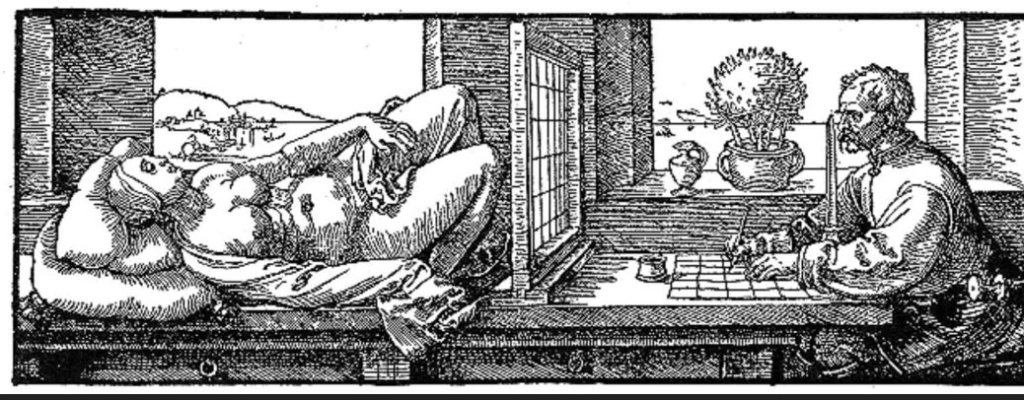
“The artist must imitate one of three objects: things as they were or are, things as they are said or thought to be, or things as they ought to be.”
Aristotle 4th century BCE
Aristotle’s Poetics
Copying, mimesis, or iteration, is a way all humans learn, and it’s dangerous to diminish it or reduce its importance on ‘artistic’ grounds. However, the best art teachers balance copying with expression.
Mimesis has always been an integral part of learning. Babies learn by copying what they see, and Greek philosophers wrote extensively about the importance of imitation in the arts. Plato hated imitation because he said it was a pale copy of his ideal, perfect world of forms, whereas Aristotle believed imitation was a justifiable, creative act. In the Renaissance, Western artists used copying methods as a primary means of teaching students skills.
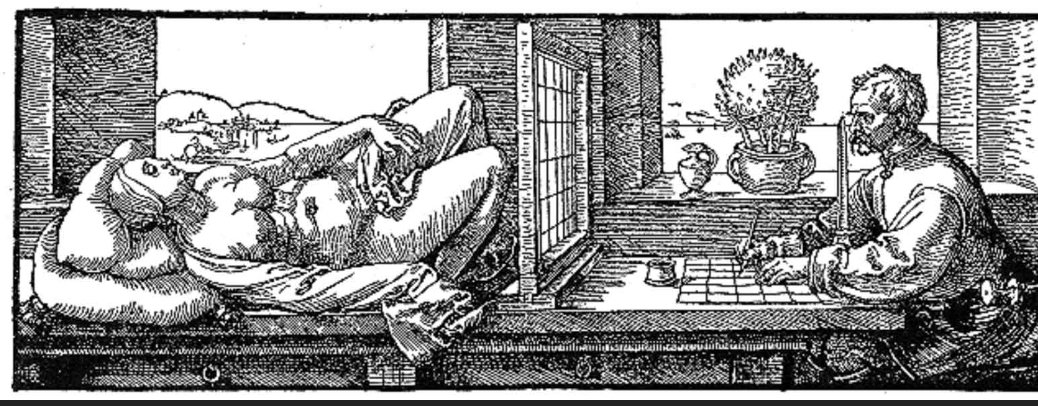
The ultimate goal for the student would be to reach a level where they could do the superficial details of a piece in such a way as for it to be unrecognisable from the main work. The principle aim of doing this was to increase the master’s productivity and profit. After their apprenticeship they would go their own way as journeymen, trying to emulate, if not succeed their master.
Copying images repeatedly is a good way to improve skills and it is firmly embedded in how we teach art. All art teachers demonstrate skills to students who then go away and repeat them. I will teach my students how to shade in this way or how to paint. They might learn how to make clay slabs or pots, use a lino cutting tool or roll ink for a print. We demonstrate, model, repeat and they learn.
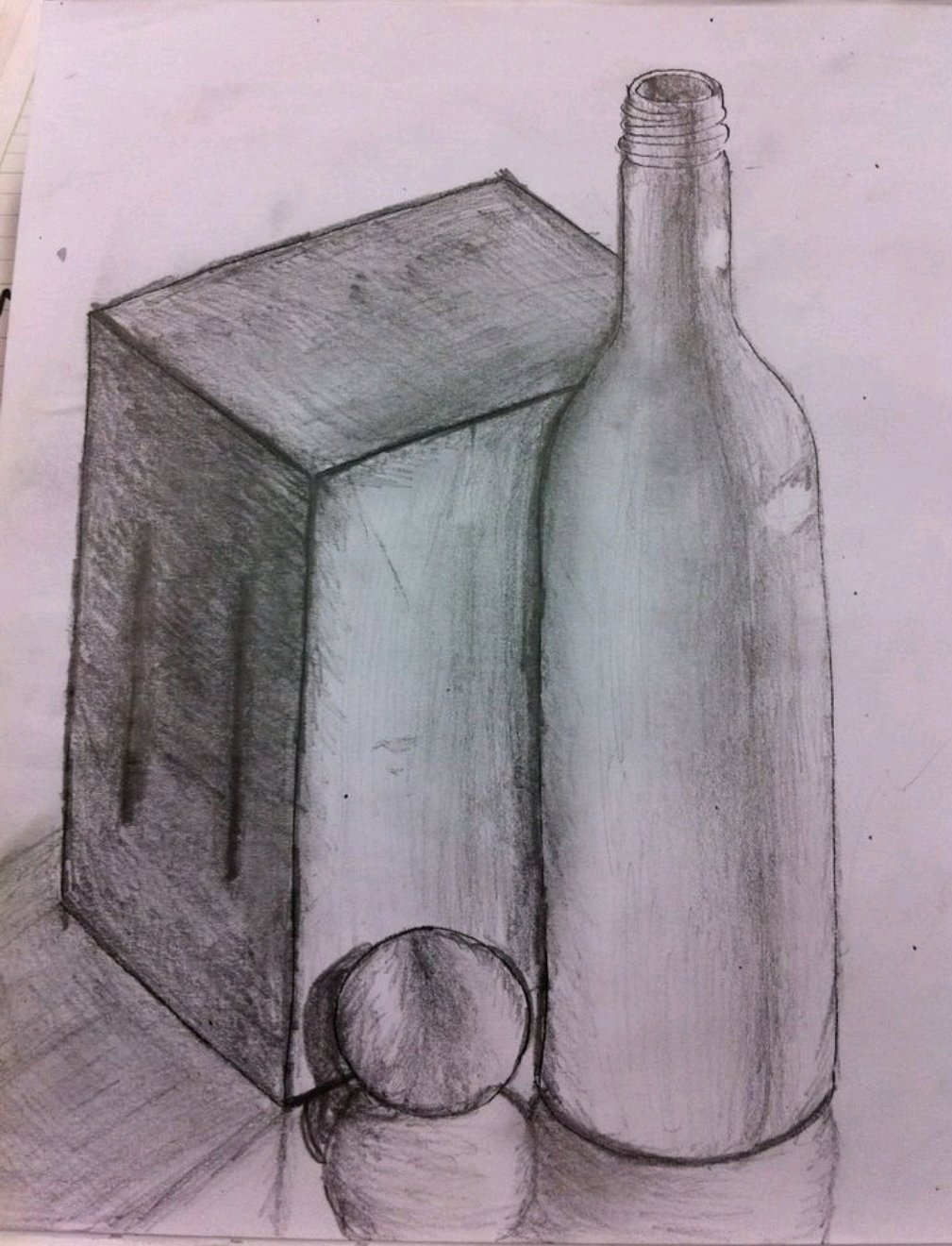
The problem is often when we move on to other topics without repeating or refreshing this skill until we can say they have learned it properly. Pressure to cover a wide subject base has many problematic issues. We tend to divide our curriculum into half term projects of similar patterns; theme, stimulus, artist, ideas, making and evaluation. We don’t have to do it this way; we can and should have one off lessons, short projects, longer ones and begin from different starting points.
But we usually don’t and so what we often seem to end up with is a collection of half learned skills, where little work is seen to achieve excellence and much is incomplete. We don’t usually repeat and drill basic skills because children get bored and we feel have to continually motivate them in art.
Now we might get children to shade cubes, balls and faces until they are blue in the face or we could plan a little smarter and embed the same skill in different ways over time, constantly going back over things so they hardly notice. Another way is to make them actually motivated enough to want to practice the skill themselves at home. I know which I’d choose.
In an exam accountable envionment we look for short cuts and can easily fall into traps, but in a pre-exam environment we should be planning stimulating exercises if the objective is to provide a broad, balanced educational experience.
By limiting success in art to copying: ‘it has to look exactly the same as the thing you’re drawing‘ would consign most of the greatest art if the twentieth century to the dustbin. And let’s not forget that the whole Impressionist movement was a retaliation against the norms of the Salon. Art has learned a lot, society has progressed. I believe our emphasis for children’s art should be providing a balance of creative experiences.
There are other ways around the outcomes problem of course. We can reduce the skill sets on offer so that students can raise their skill in a few chosen areas only. Let’s not kid ourselves here though – what people usually mean by that is realism or accurate depiction. I have never seen anyone teach only abstract art for example.
This method will of course raise the students ability to reproduce drawings to a more faithful representation of the original and in a world of exam pressures and high stakes accountability, many have taken this stance.
High skills look impressive to the untrained eye, but the expert soon sees through this facade to ask; ‘what are you trying to tell me about this subject that I didn’t know before?’ ‘Are there other, more effective ways of doing this?’ When all I’m seeing are the same skills depicting the same subject matter in the same way I know the teachers haven’t taught original thinking skills. Skill is a fabulous thing to have. Applying it in original ways is another matter.
Michelangelo said, “An artist paints with his brains, not his hands.”
This over-emphasis in one area is not one I would take because the principle purpose of art is not merely to copy work or draw and paint realistically for that matter.
Skill is determined by the art domain in which we are operating; potters use clay, textile artists use fabric, printers use ink etc. I define a skill as being the ability to externally realise your cognitive intentions. The domains of drawing and painting themselves contain hugely diverse skill sets. Some draw technically, others digitally, some paint abstract, others with line and colour, some with light and shade. Art is diverse, rich and varied.
Bauhaus model
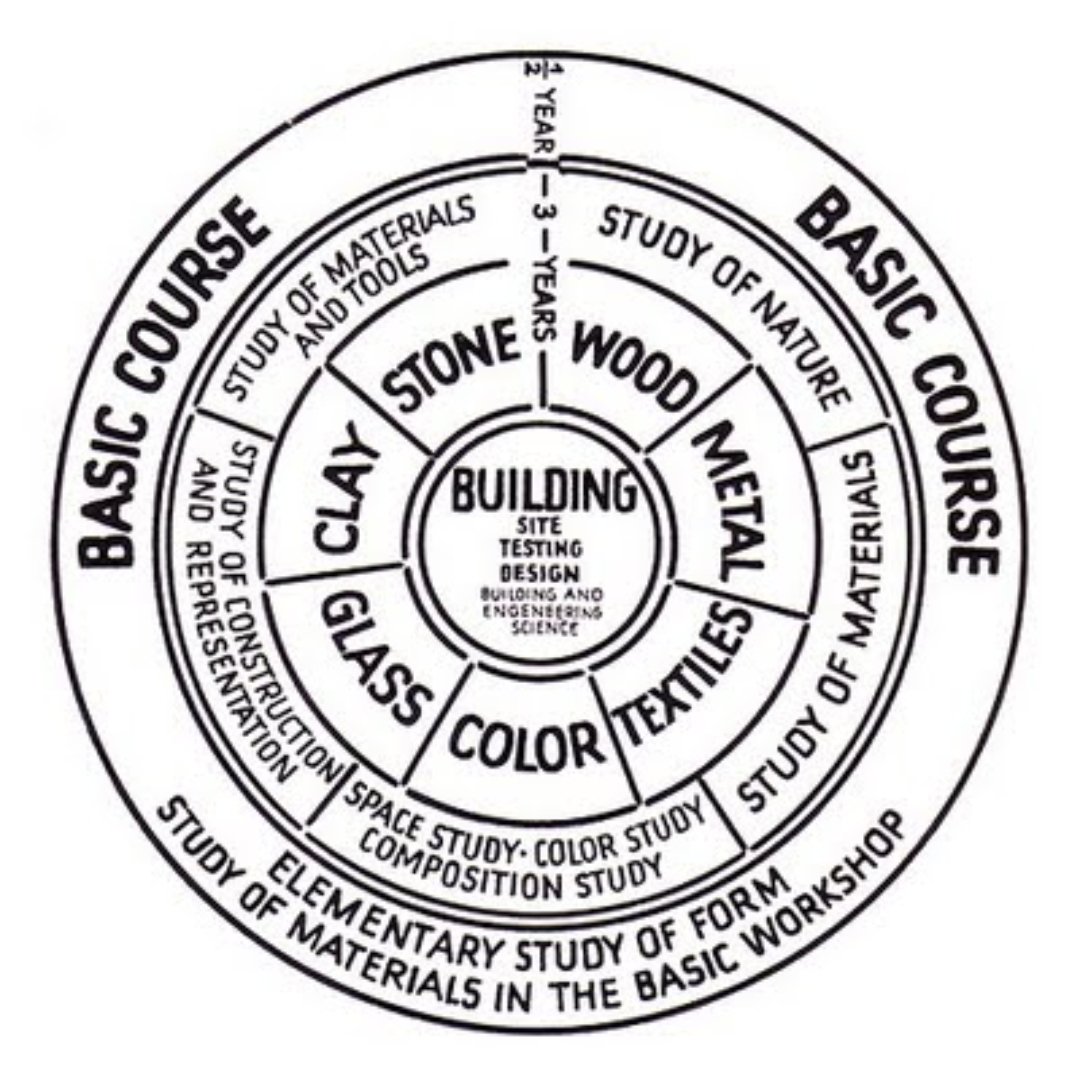
If we look at a great school of art- the Bauhaus, upon which most western models of art education are based, we see, the mastery model operating in tandem with an experiential model that developed into excellence.
Bauhaus course leader Johannes Itten initially encouraged students to produce their own creative designs based on their own perceptions instead of getting the students to copy from models, as was still done in the traditional academies of art. A thorough, well-grounded skills and knowledge base was not ignored, but rather taught alongside personal expression, not instead of it. Students had half a year of general study before specialising in one area of architecture. They did not follow a ‘skills first, creativity later’ approach or a vice versa one. They interchanged experience with knowledge and skill with imagination. Neither comes first, neither is more important than the other.
other art schools through history have used alternative models – Black Mountain College and Victor Pasmore’s Basic Course focussed exclusively on creative expression, but the knowledge, skills and creativity model has always been the principle behind UK curriculum design. The national curriculum was designed to provide a broad based foundation in art, craft and design.
As well as providing students with basic experiences of various art disciplines; drawing, painting, ceramics, printmaking, 3D sculpture etc. there was the importance of knowing and understanding the history of art, craft and design more fully, idea generating and evaluation are all essential artistic traits.
This is my point. Children need experiences of different kinds of art making, processes, thinking and skills. They need access to different kinds of knowledge and experiences because they are children and they might never get the opportunity to do so again in their lives. They should learn to express themselves and their ideas in the least accountable ways that do not aspire to narrow definitions of excellence, but rather promote individuality and uniqueness.
Is this at odds with what the so-called ‘great master’s’ taught?
Remember, in Renaissance times only those with artistic talent were selected for training and usually around the age of fourteen. Before this age Leonardo drew in silver point obsessively and stole paper to do so. Durer’s drawings at 13 are sublime.
In education today however, we aren’t teaching the talented few but everyone, regardless of ability or interest and this has a profound impact on how and what we teach.
Besides, copying the masters work was only one aspect of an apprentice’s training. Learning to understand what we now call the science of the world around us was vital too, as was learning technical knowledge of mixing paint and preparing canvases etc.
Apprentices learned the basics of shading, proportion and measuring by mimicry in much the same way as students do in most schools today, only more rigorously as this was their profession not a one hour lesson. They would regularly draw from nature and Leonardo da Vinci would take his students to draw moving figures in the town square.
He would cut figures and shapes from card then throw them into the air, getting his students to draw them on the way down at lightening speed. This type of gesture drawing is an important way to try to train the hand to work as fast as the mind.
Another technique Leonardo used was visualisation; he would take his students onto the streets to look at crumbling plaster or clouds to see if they could find forms and shapes in them.
This ability to produce images in the mind was vital to Renaissance artists, because they didn’t have photographs and couldn’t always afford models to pose for them.
Also important to early Renaissance artists was the ability to control, select, edit and synthesise their subject matter. Historically significant works of art were all carefully composed, arranged and structured. To train their students in this they would teach them how to pick out only certain aspects of what was in front of them, to exaggerate some and hide others, to emphasise and obscure, and in this way new meanings could be derived from the same image. A face with a prominent nose differs from that with prominent eyes or lips.
So we can see, raising skills is important but so is teaching people to think and see intelligently at the same time, not as an add-on or future step. If we specialise knowledge too early we lose the breadth and depth needed to work effectively.
Post 16 Art education today is usually very vocational led. Students select areas of interest and education is tailored to suit these ambitions because different disciplines of art have unique approaches. Foundation courses; another essential grounding in the basics of art prior to degree study are disappearing as an expensive luxury and many degree course leaders of art are struggling to cope with students who have been fed a diet of teacher-led, prescriptive, literal, exam style thinking.
What we need more than ever are students who have a good general experience of art in all its many forms, who can create their own original ideas without fear of failure, without anxiety about skill, but rather how to convey and transmit those ideas well enough for purpose. To obsess about quality of outcomes at such early ages cripples the very purpose of art education itself – creative expression.
Reverting back to a misunderstood, misrepresented five hundred year old model of teaching art apprentices is not the way. Copying and repeated practice is, and always has been a vital part of learning any skill, but it must be balanced with opportunities for personal expression and execution.
Teach your students how to shade a cube by copying by all means, but then ask them to draw something that is cube shaped. This opens up the application of the skill to all sorts of possibilities. And that is art.


 Paul Carney’s Blog
It would be great to hear your thoughts about this