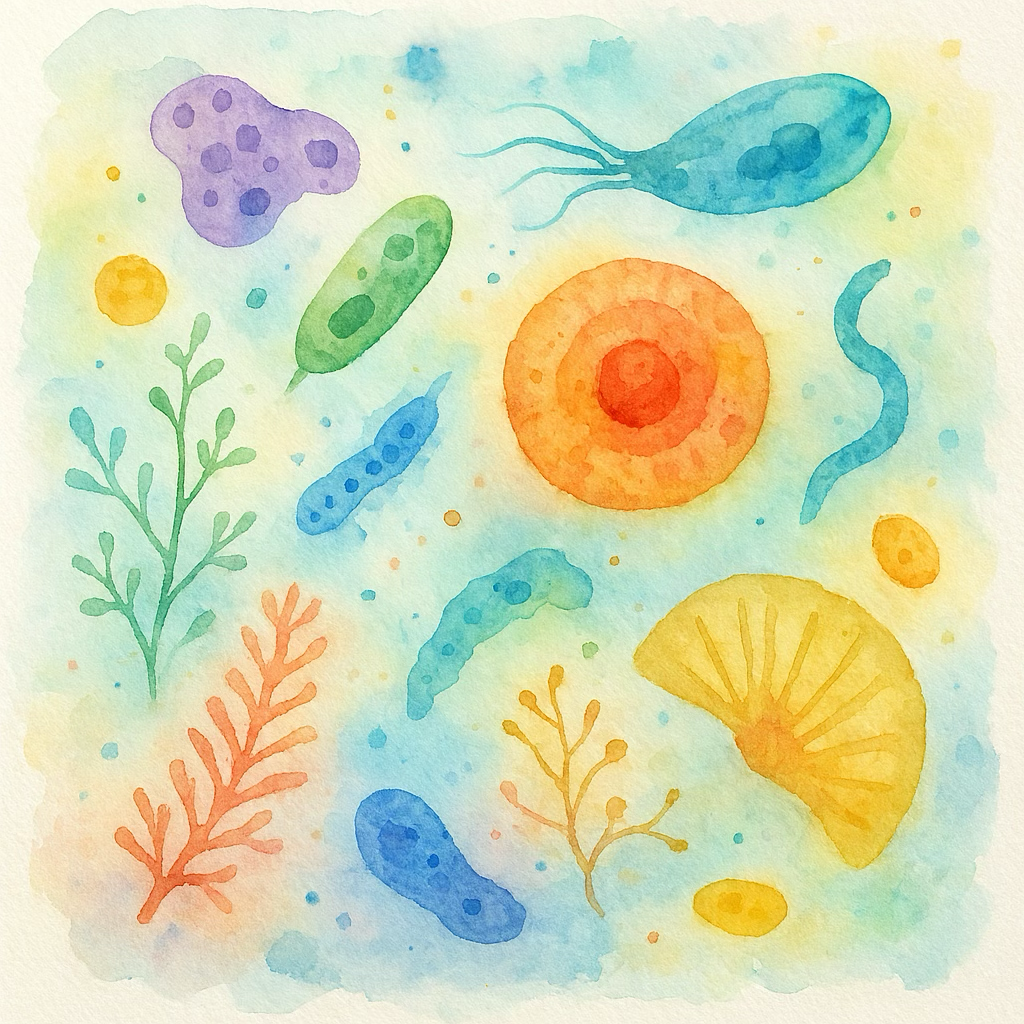

Science writers typically describe evolution using phrases such as ‘that’s the way evolution shapes us’ or ‘this is what evolution does’, so that it ends up sounding like an impersonal living entity, rather than the collection of abstract biological processes it actually is.
When writers use language like that— language that personifies and animates inanimate things— it’s easy to get confused, and believe evolution is an omnipotent being, moulding and shaping life to its whims.
Evolution isn’t like that. As Philip Ball says in his book ‘How Life Works: A User’s Guide to the New Biology’, evolution has no agency of its own; rather, it is a by-product of simply being alive. Evolution isn’t a force, or even a single process; it’s essentially the way living organisms adapt to an ever-changing, competitive world. In short, it’s the living organisms driving the evolutionary changes, not the other way round.
For example, it is often thought that evolution is the product of ‘selfish’ genes or DNA, but this isn’t true either. Despite all of the fanfare surrounding the mapping of the human genome, and the hope that the secrets of life had been found, it has been discovered that genes can accomplish nothing on their own. They are servants of the host organism, not masters of it.
Evolution isn’t a thinking, breathing independent being then; it is a series of biological processes that occur from the act of living in an ever-changing world, and the struggle to maintain that life long enough to pass on your genes to the next generation. Evolution is the behaviour of organisms, it’s their struggle, their fears, their greed, their over-consumption, their bullying and avoidance, but also their cooperation and even their death. Evolution is finding the right sexual partner, it’s migrating to live in another environment or being isolated into a small community. Evolution is random, unpredictable, diverse, and comes out of chance accidents, circumstances, and sporadic fluctuations. Evolution is the inherent struggle to live, to eat or be eaten; it’s red in tooth and claw, it’s the battle for survival, but it’s also love and cooperation.
Scientists have brilliantly uncovered how organisms adapt and change to meet the demands of fluctuating circumstances, but why they do it is all around us, in every human society, and in every natural environment. Evolution isn’t a being in its own right, it’s the drive we all have inside us. It’s the reason we get up in the morning. It is our families, our loved ones, our children, and the daily grind to put food on our table. Evolution is life itself.


Leave a Reply