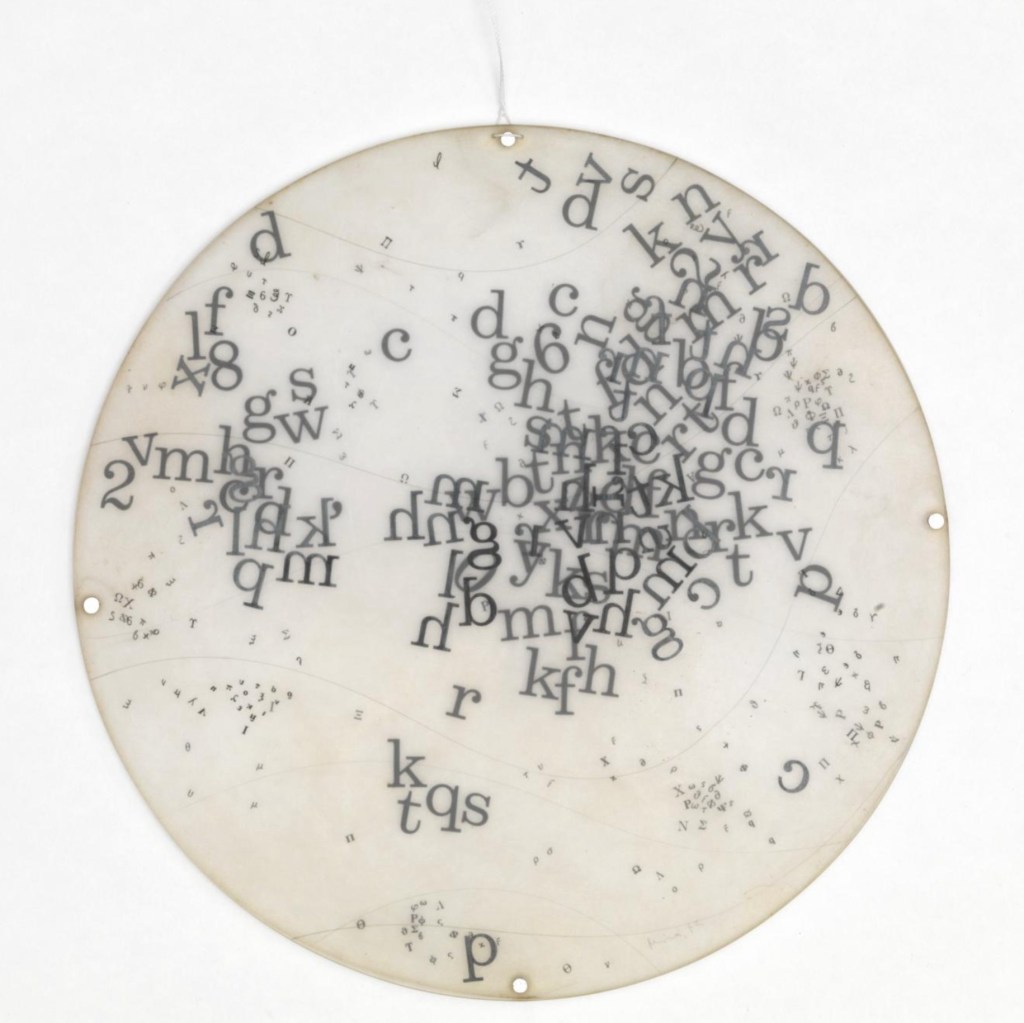
If you could permanently ban a word from general usage, which one would it be? Why?
All of our thinking is through words, all of our actions, all of our science, all of our literature, all of our history, all our technology, all our kingdoms and empires. All of it stems from language and communication. And yet, there are so many times that words fail us. So often, words cannot convey or encapsulate what we mean. Some of the most profound things we experience are beyond words:
- The sight of your newborn baby placed into your arms for the first time.
- The grief felt at the passing of a loved one.
- A serene, exotic sunset over a tranquil, paradise ocean, or a view from a mountain.
- An incredible work of art.
- A beautiful piece of music that moved you emotionally.
- The kindness of a stranger, the generosity of someone who barely knows you.
- The thrill of a special kiss.
- Reuniting with someone you haven’t seen in a long while.
These are all emotional states, of course. The fact that we can’t always describe our emotions fully is not exactly news. Language has limitations. Emotions are subjective, abstract concepts. The fact remains, however, that language can only take us so far in our quest to understand the universe. Some things are beyond words.
Take, for example, our definitions and descriptions of matter— the stuff of our universe. It doesn’t matter how precise or how exhaustive our definitions are; they too fail us, as I described in an earlier blog post. Whenever we describe a thing, we do so from a narrow perspective, such as a physiological, chemical, or mathematical angle, for example. No single explanation is complete in itself. They are like partial eclipses of a greater whole. We might jigsaw them together to create a pretty definitive description of the thing, but even so, it is not exhaustive because there are unseen, hidden aspects we cannot define. Maybe these missing things are arbitrary, perhaps they aren’t important, or maybe they are just emotional states or fleeting things. All I do know is that when things are reduced to data, when they become a statistic, a measurement, or even a detailed description, they become less than what they are. Reality can only be described from an external perspective. We cannot know what it is like to be something else because we cannot be both it and ourselves at the same time.
It’s not just me who thinks this. In 18th-century philosophy, Immanuel Kant thought that external appearances were to be regarded as representations only, not things in themselves, and so their true essence was unknowable. For Kant, this unknowable aspect of things was the basis of his Transcendental Idealism. The unknown wasn’t a thing to be observed, as modern scientists try to do, so much as something to be left a mystery— a noumenon, as he called them. It was their ineffable nature that defined them and gave them meaning.
In his work the Tractacus, Austrian philosopher Ludwig Wittgenstein argued that we use language as a picture theory of meaning. He said that words stood for things and so language defined reality. The logical structure of the world was defined by language, and that there was a deep meaning at the core of all the words we speak. Words link these deep concepts together. He says the most important things are unsayable: ethics, religion, aesthetics and our attempts to define them are meaningless..
Most world religions say similar things about the nature of reality. The ancient Chinese believed in an underlying universal force, that was beyond human comprehension, and which could not be described or defined in words. Lao Tzu believed that the Tao must be experienced through intuition and insight. At the heart of Lao Tzu’s philosophy is the idea that the universe is governed by a natural order that is beyond human understanding. Christianity, has constantly emphasised a mysterious hidden aspect to the world that is revealed to those who seek wisdom and understanding. Hinduism teaches that the world is Maya – an illusion or unreality, that must be understood for true self knowledge to develop. In Buddhism, reality is seen as a form of empty projection, that is transient and short-lived, without concrete identity. This emptiness leads to suffering, which once understood, can bring about our redemption. Plato believed that only the mind could access true reality, the physical world we see being like a shadow cast on a cave wall.
In response, contemporary science does not denounce these ancient beliefs. If anything, they take them one step further. Science tells us that when we break matter down to its constituent parts, it pretty much disappears into minuscule particles, held together by invisible forces. Reality then, according to most world religions and western science, may be chocolatey on the surface, but inside it is a hollow disappointment. Much like one of those cheap Easter eggs you get from a bargain store. Words can’t fully describe it, and descriptions are flawed perspectives, that don’t properly encapsulate what we observe.
This illusory, transient aspect of life leads me to conclude only one thing – that the whole universe must be an orchestrated grand design. I think this because of both what I see, and what I don’t see. If the universe was a spontaneous, random event, I would expect to see evidence of chaos, chance and happenstance. I would expect to see evidence of disorder, mess, disarray, and disorganisation, because indiscriminate things don’t pop into existence as perfect wholes, or even self-organising systems. Instead, what I see is that we are living within an enormous, natural cathedral of organisation, symmetry, order and purpose. I see a vast, dynamic superstructure, that isn’t arbitrary, it has value, it has positive and constructive ends, even when at times it seems the opposite. What’s more, it all popped into existence within a split second, like an incredible magic trick, that science is desperately trying to figure out. The more we reveal, the more we scratch beneath the surface, the more reality slips away from us. The harder we look, and the more we discover, the more we begin to understand that we are part of something beyond any language we have invented. This is not a universe we can ever comprehend. It is not a thing to encapsulate in a book, a poem, or a song. The universe, us, and everything in it, is beyond words.


 Paul Carney’s Blog
Leave a reply to Anshu Nain Cancel reply