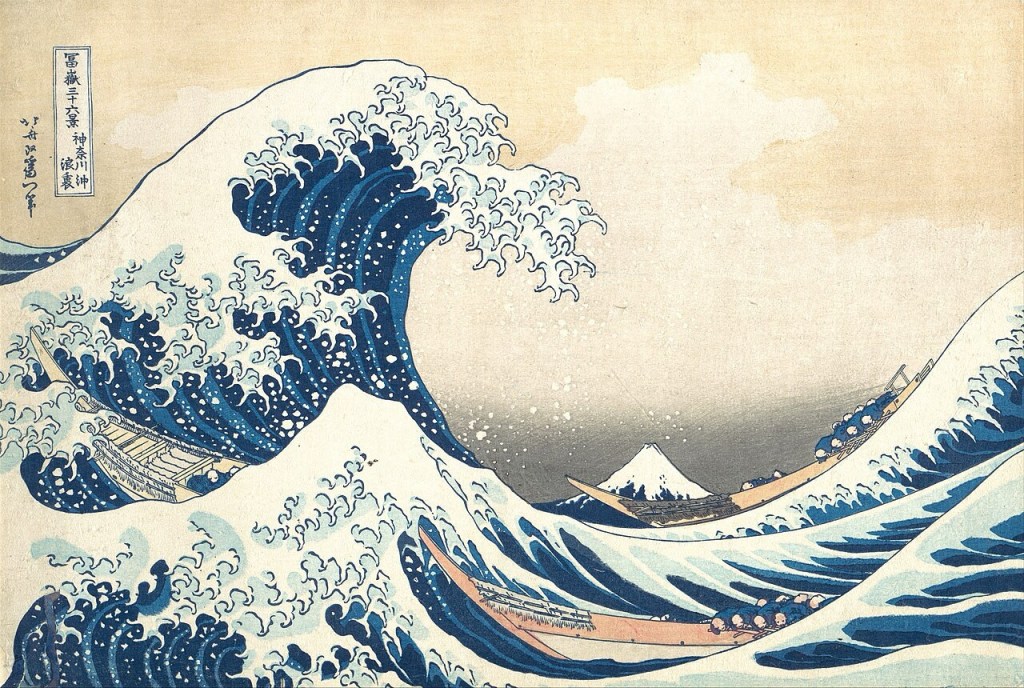
The Great Wave off Kanagawa, 1831 by Hokusai is one of the most iconic images in the world. But it’s important to understand that this Japanese print was not simply a picture of a wave, but a highly symbolic work with a deeply profound, spiritual message.
It’s also important to bear in mind that it is not an isolated image, but one in a series of works called 36 Views of Mount Fuji. The subject of the print then is not the great wave, but the mountain in the distance. Mount Fuji is a popular subject for Japanese art due to its cultural and religious significance in Shinto and Buddhist traditions. Mount Fuji was seen as the source of the secret of enlightenment and immortality, a tradition that was at the heart of Hokusai’s own obsession with the mountain.
The picture is meant to be read from right to left. In this way, the fishermen are battling against the mighty omnipotent wave before them, rather than fleeing it. In Shinto culture, nature is all-powerful, while human beings are ephemeral. The image then, symbolises our battle against the elements, and that it is only through sacred worship that we can win this struggle and find our gateway to immortality in the heavens.
Addendum: Other artists, including Hiroshige also produced a series called 36 views of Mount Fuji, Henri Riviere did Thirty-six views of the Tour Eiffel, and Hokusai himself produced a later series called 100 views of Mt. Fuji.
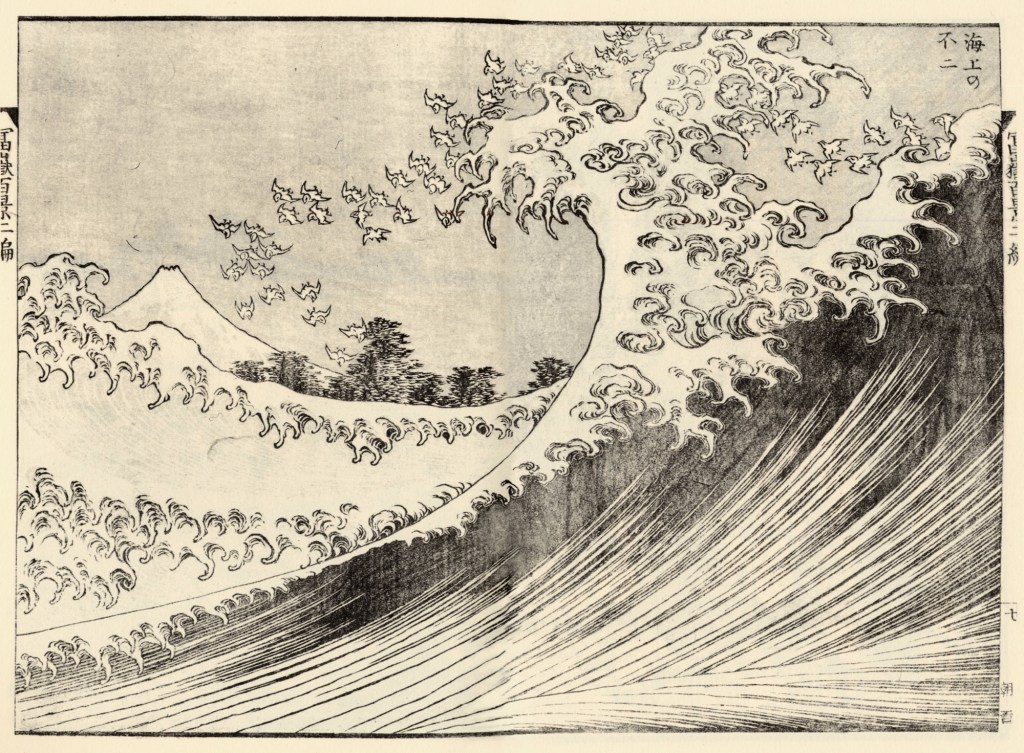
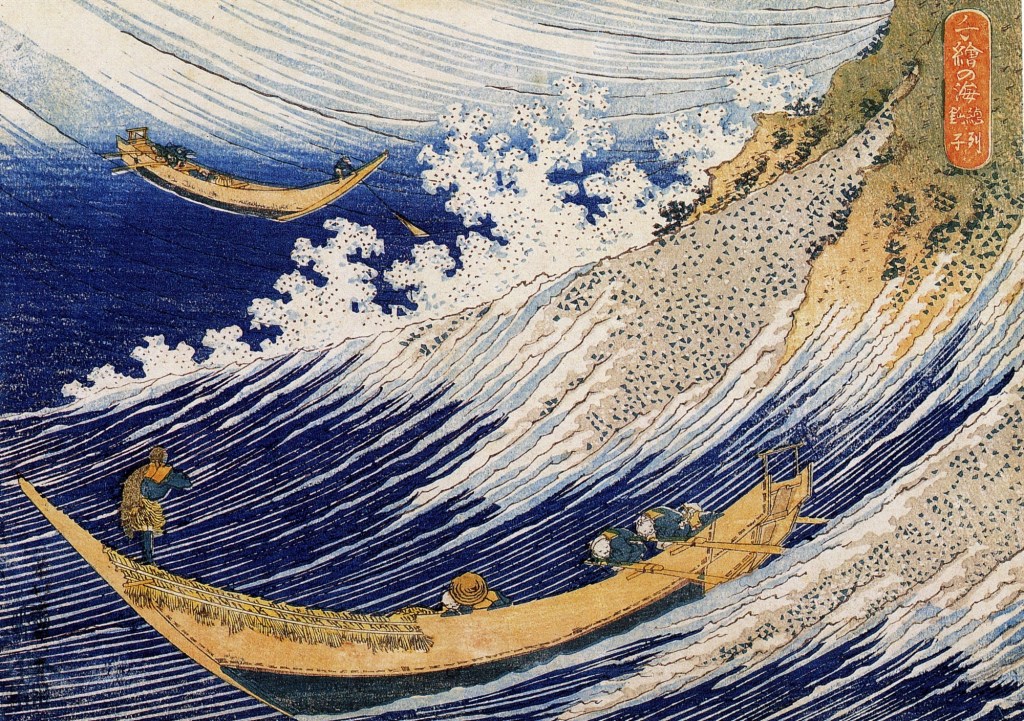
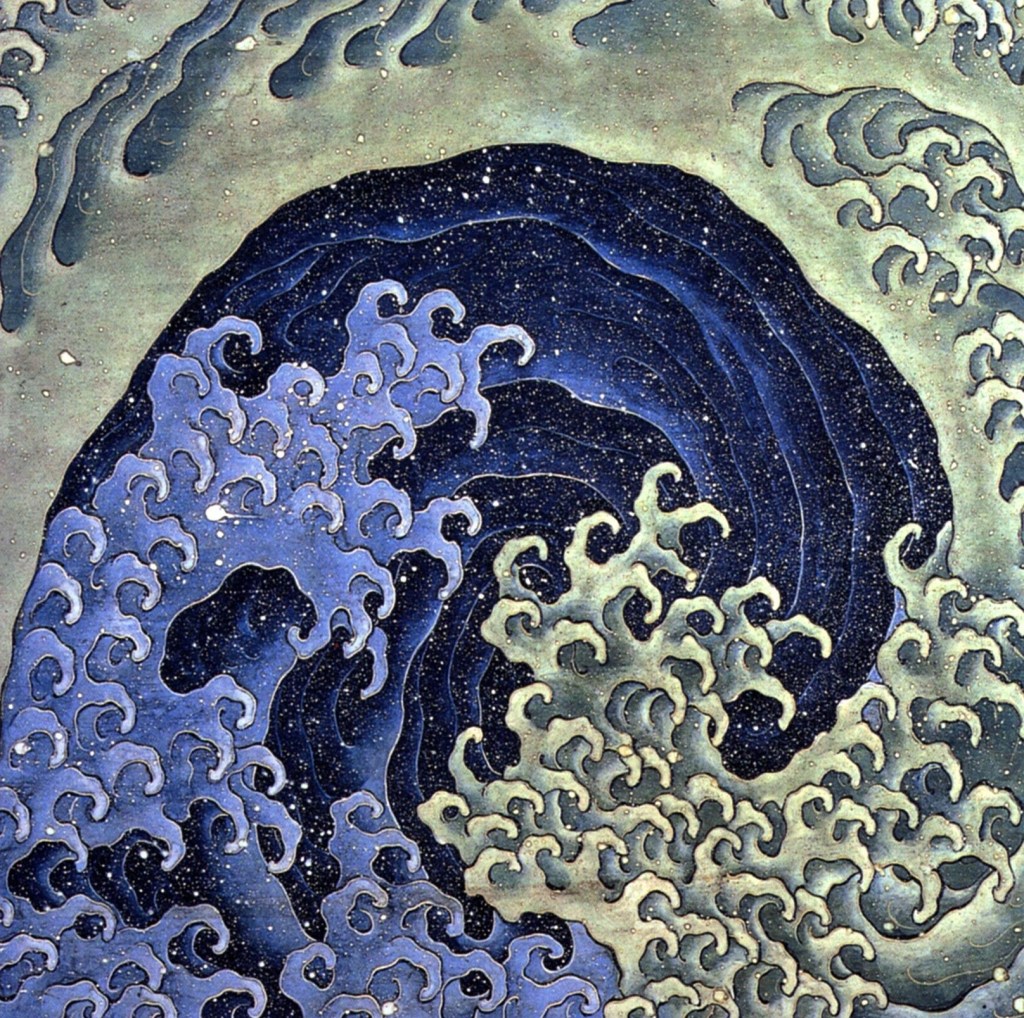
Here are some more great waves by Hokusai:


 Paul Carney’s Blog
Leave a reply to Armann and Kaymann Cancel reply