Which activities make you lose track of time?
Einstein showed that, rather than there being a single unified time, time is relative, and so every phenomena has its own time. There isn’t a single entity of time, there are numerous times, like a lattice, layered, interwoven, connected but unique.
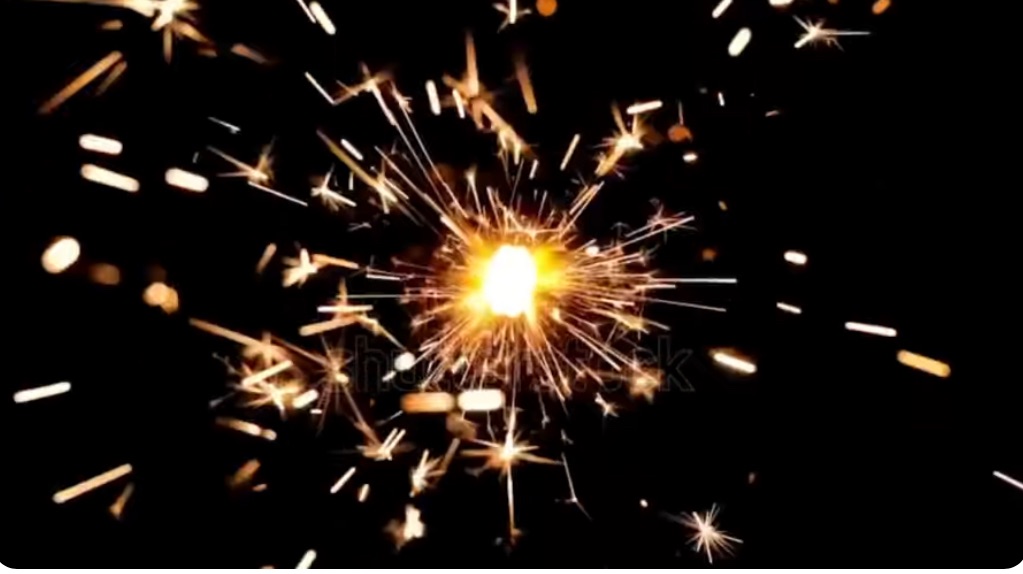
The only scientific principle that is time dependent is the law of thermodynamics – and so time appears only where there is heat. In this way, we experience time like the burning of a fuse, moving uniformly from past to future, expending energy. And, just as the pyrotechnic batter on a sparkler is fixed, so the laws of the universe state there is no difference between past and future. It is simply that we cannot access it. We are like a collection of sparks on the end of a child’s sparkler. Each of us wrapped in our own conscious perception of time, yet each also bound to a greater passing, the burning of the sparkler tip: the movement of events on the earth and in the universe.

Even with the invention of clocks and time zones, it is our own perceptions of time that are most important. Whenever we are focused, whenever we are in our sweet spot of Flow and concentration, we ‘lose’ time. It appears to go faster because we aren’t concentrating on our surroundings. We are detached from other, local phenomena from which we regulate our perceptions of time. By contrast, when we are bored, or waiting for something, we are entirely focused on time, and it seems to pass slowly. Nothing has changed, only our perceptions of it have.
We all need to enjoy our moment of burning brightly, to savour it and wring every last drop of pleasure from it while we can, because it does not burn for long. If you want to get the most out of life, live it to the full. The irony is, you’ll feel like it has passed too quickly. If you want to make it seem like you are getting more time, then do nothing and learn to enjoy the silence. This is the paradox of life and time.


 Paul Carney’s Blog
Leave a reply to Vidisha Mitra Cancel reply