The exercises and techniques used in this post are contained in my book: Drawing to Learn Anything. Buy from www.paulcarneyarts.com
Drawing to Learn Anything is a collection of ideas and explorations into how simple, non-skilled drawing can help you learn more effectively in subjects across the curriculum.
It shows you how even crude, stick people style drawing can help you remember better, help you understand complicated text, become better at maths and even answer essay questions.
Reading, understand and responding to the externally set assignment in art and design:
By using an online tool for measuring reading scores, I was able to measure the reading age of one of the questions from the GCSE 2018 externally set assignment as having a reading age of 17 to 18 years. The average reading age of 15 to 16 years olds is around 13 years.
Human figure
The human figure was a major feature in Egyptian and Etruscan wall paintings. European and Asian sacred buildings and African ritual sculptures often included representations of the human form. Twentieth century artists explored new ways to respond to the human figure. The Cubist painters and sculptors reconstructed the figure as seen from multiple viewpoints. Francis Bacon and Umberto Boccioni were inspired to create figures distorted by movement. Antony Gormley uses steel bars to create sculptures that suggest drawings of the figure in space.
Explore appropriate sources and develop a personal response to Human figure.
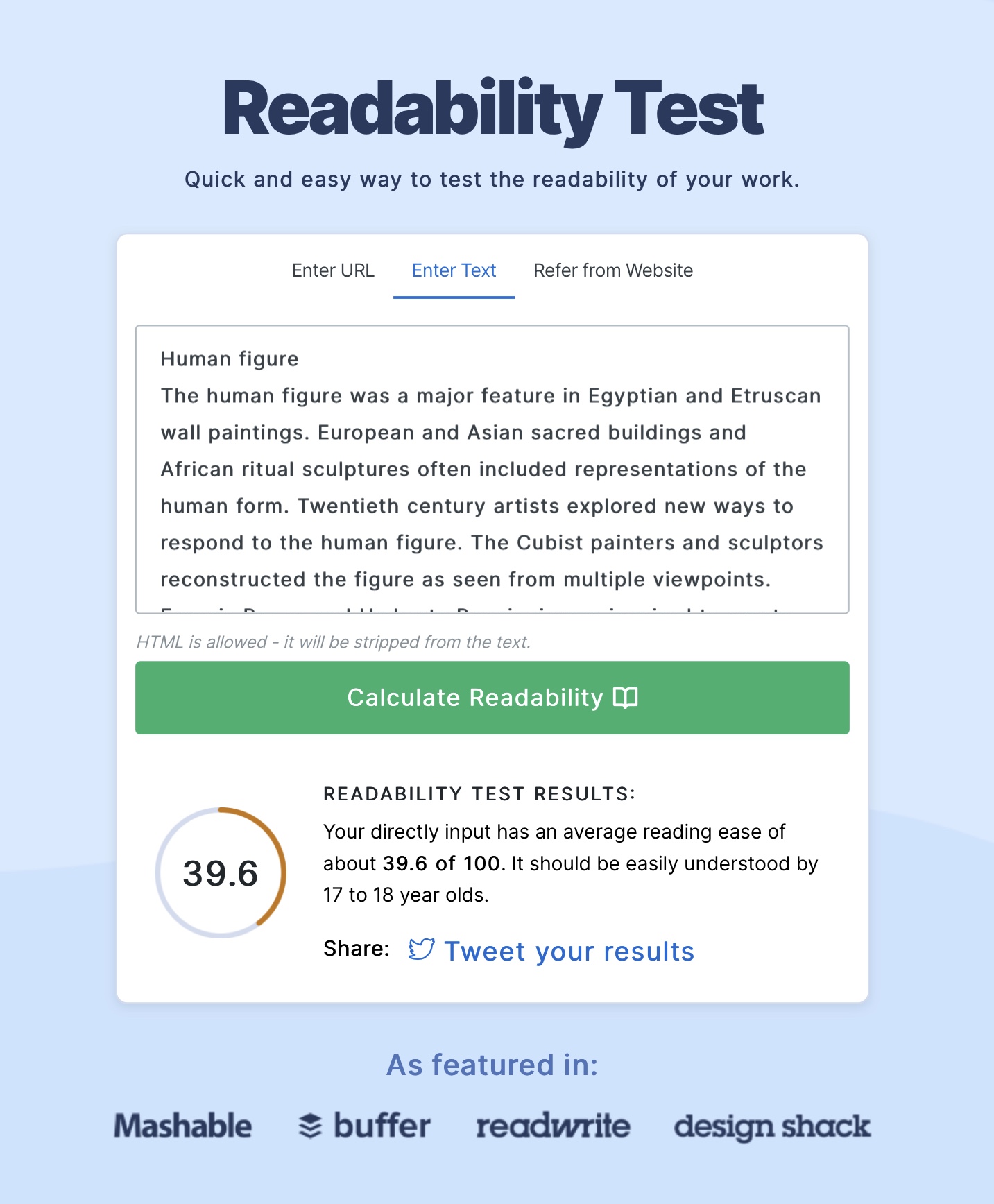
The scores were fairly alarming and said that this one question had a reading age of 17 to 18 year olds.
When you compare this to the GCSE English Literature paper, the difference is stark. Most questions in the Language and Literature papers are short questions with low reading scores, the larger passages of text are usually reserved for sample source texts to be read to answer the questions.
This is one such sample text from the 2019 English Language paper;
I watched as a vast wave gathered behind the boat, soaring above the cabin, a wall of white water towering over our tiny boat. Once again I dug the oars in to propel us forward, but the wave was too big. For a moment it felt like we were moving backwards as we were sucked into the belly of the wave, the horizon disappearing as the churning surf enveloped the stern of the boat. I felt it lift, as a torrent of water crashed over the boat and I felt myself falling backwards. I was aware of the boat collapsing on top of me. I struggled to pull my feet from the stirrups to no avail. The world went black. I felt a weight on top of me and then a rush of cold water as my body was brutally submerged into the bottomless Atlantic Ocean. My feet were sucked from my shoes as I clung on to the oars for dear life, but then they too were dragged from my clasp. My mind went blank as I tumbled through the surf, spun around roughly like clothes in a washing machine. Ben Fogle and James Cracknell, the Crossing.
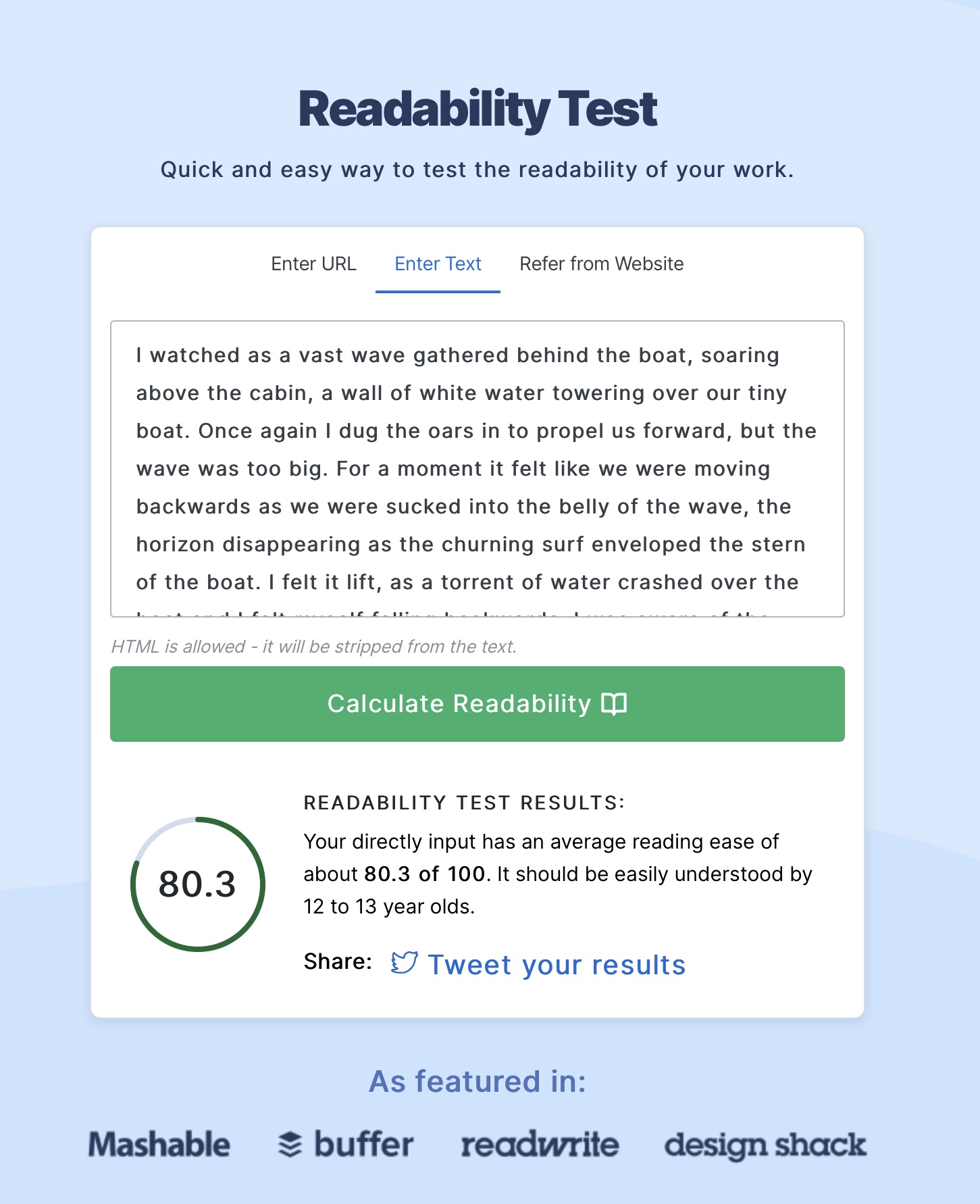
In comparison to the art exam paper,the reading age of the English paper text was 12 to 13 years.
The National Reading Agency reports that almost one in five 15-year-olds across the UK do not have a minimum level of literacy proficiency. Around one in five of the same group have high reading ages. This would imply that the reading age of the art and design externally set assignment is way too high for children of that age to be able to read, understand and respond to.
So what can we, as teachers, do about this? I think firstly, we need to understand the process of reading which comes in several stages:
1. Deciphering the text through phonics and other means
2. Constructing meaning from the text
3. Making inferences from the text.
What I think is important for us is being able to construct meaning from the exam questions then making appropriate inferences to answer the question. This is where I think drawing can help.
We construct meaning from text in a number of ways, visualising and making connections being two, (paraphrasing and questioning being others).
Visualizing
When visualizing, readers create mental images of what they are reading. Visualising requires the reader to break down the text then rebuild it. We can therefore get students to underline key words and draw their meaning using non-skilled, glyphic drawing. By creating these quick visuals through drawing, students will be making strong visual connections and should understand the question more easily.
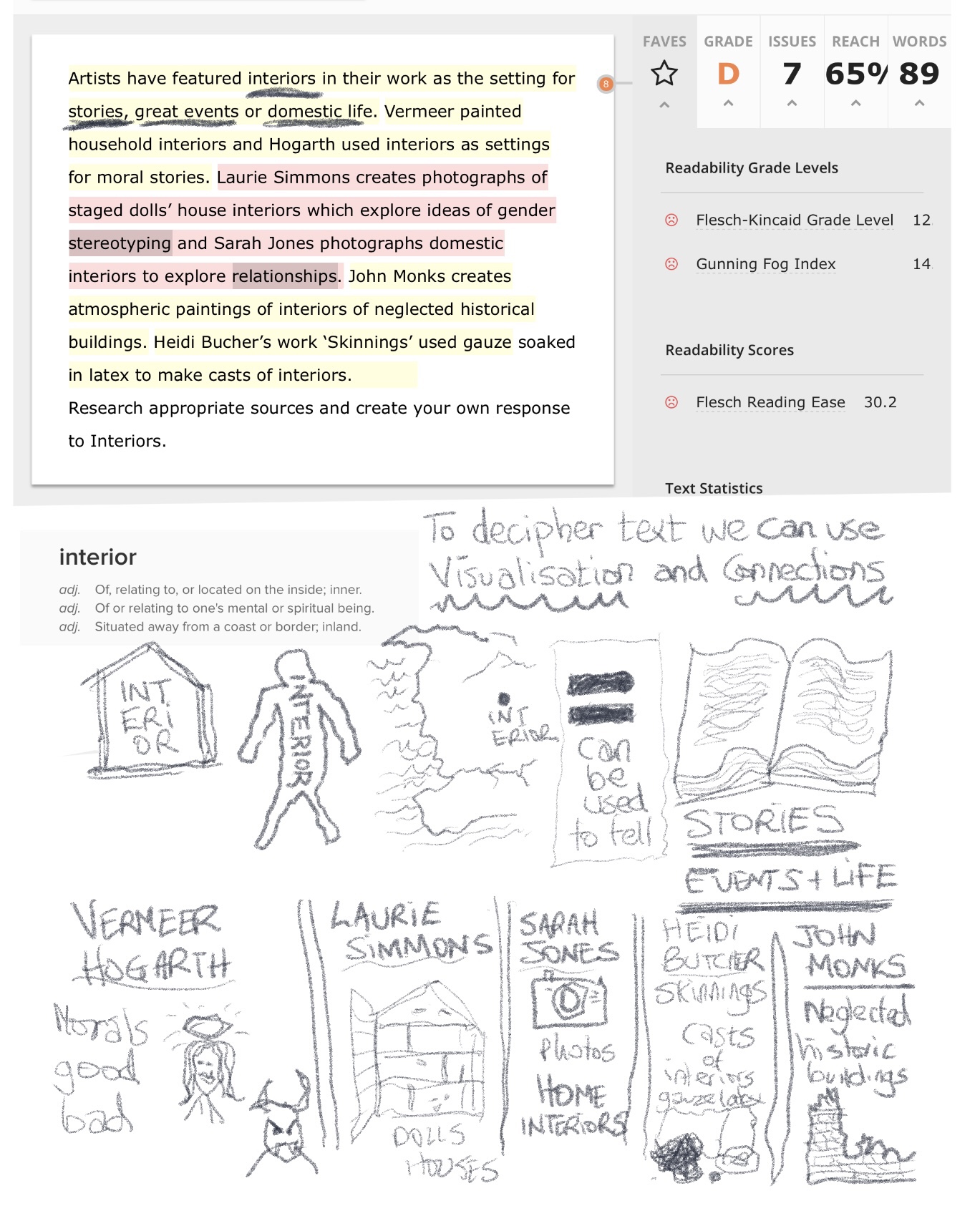
Making Connections
Another way we construct meaning from text is by connecting their background knowledge to the text. Known as making connections, the student uses their prior knowledge and experiences as a way to interpret what they are reading. What the drawings do therefore, is to aid students in being able make connections to the pictures they have just drawn. In my example, some students might immediately connect to the Doll’s House, or photography.
Making Inferences from text
This is a technique used in English to be able to understand the implications of books, plays or information. What you, as the art teacher need, is for students to be able to make appropriate inferences from the exam question.
English teachers use a series of instructional steps to help students determine the inferences of text. They will ask them to read the source text, then read and understand the question. Next they will get the students to list details from the source material before modelling how to look for patterns and relationships among the details—to determine what these details have in common.
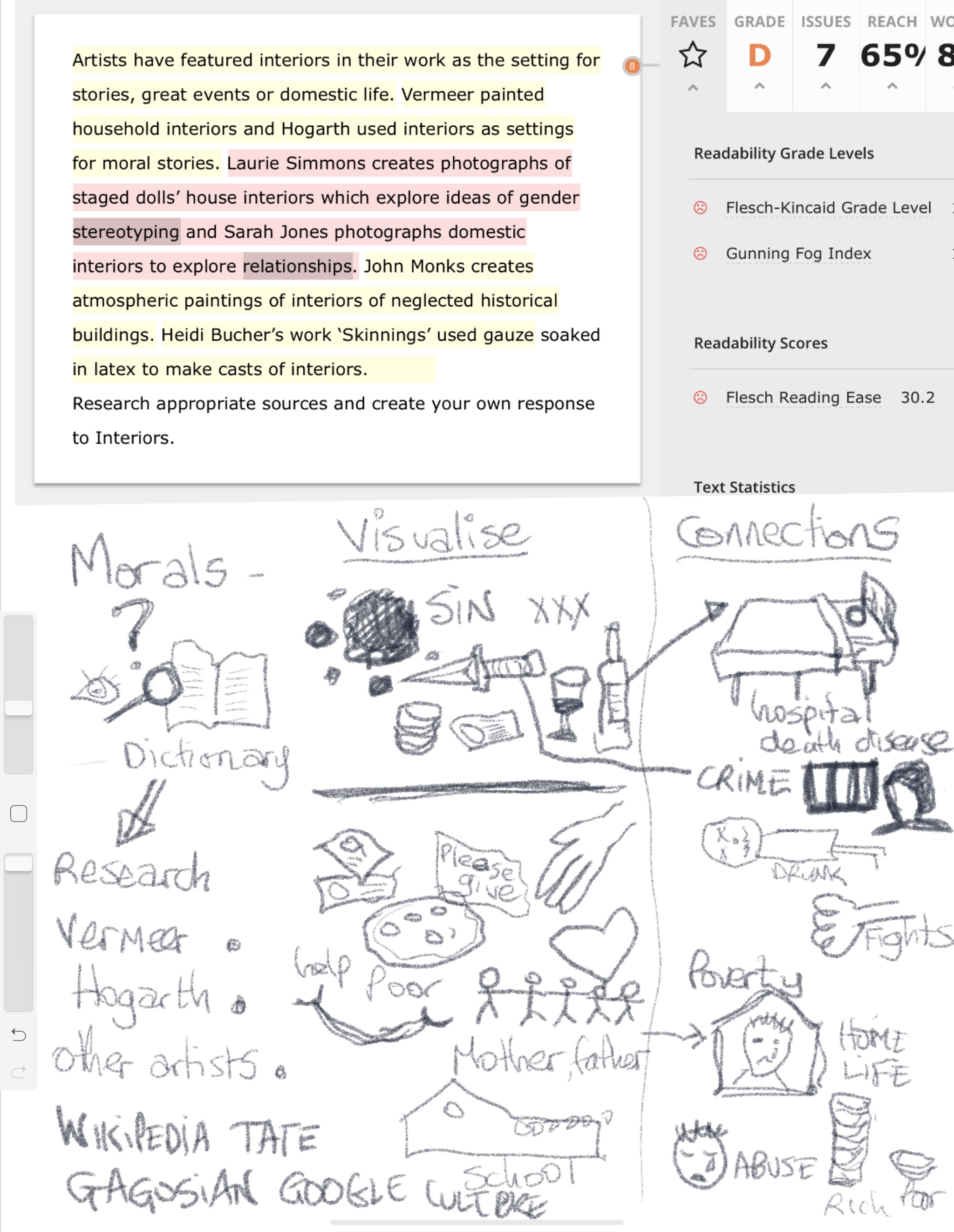
We can use drawing again here because it is very visual and immediate. In my example, I’ve selected the morality aspect of the question because I was most interested in it. I’ve listed details from the question: the artists names mentioned, a dictionary definition, and also where I need to go to find out other artists sources to help me.
I’ve made two columns, a visualising one and a connections one and in them I’ve tried to draw what I think morals are and what they look like.
Then, in my connections column, I’ve drawn what I think each of my visual idea might mean.
What this process does is to help me make inferences: i.e. it helps me to more easily select which avenue I want to go down when I answer the question. From my example I can now see that I might do a piece based on alcohol and violence, or poverty or abuse.
All of this can be shown to link back to the original question through my sketch of interiors having an internal, spiritual meaning.

 Paul Carney’s Blog
It would be great to hear your thoughts about this