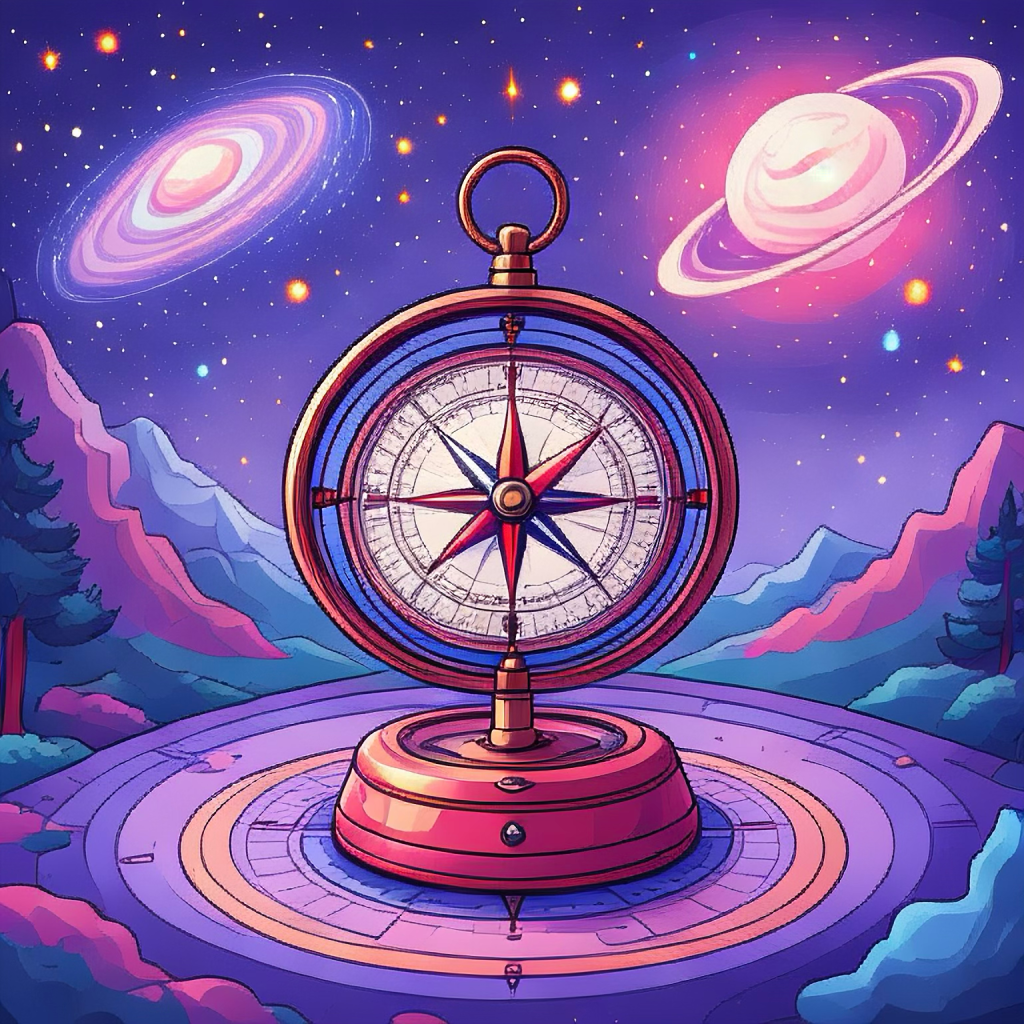
‘Both upward and downward, both in the large and in the small, science seems to be reaching limits. It is thought that the universe is of finite extent in space, and that light could travel round it in a few hundred millions of years.’ Bertrand Russell, What I Believe 1925
Aristotle’s geocentric model of the universe, with earth in the centre, fitted with western Biblical ideologies and so stood for two thousand years until Copernicus upset the apple cart and proclaimed the sun was at the centre of things. Despite religious zealots’ best efforts to resist, it became the mainstream orthodoxy.
Up until recently, it was thought that our galaxy was the only one in existence. Then, in 1925 Edwin Hubble confirmed existing suspicions that the strange structures spotted in the heavens were in fact, other galaxies similar to ours. This discovery put humanity in a quandary. How could Holy texts, that said that the universe was made solely for us, be correct? If so, why make a universe so vast and complex, if it was only for our benefit? It didn’t make sense.
Mathematical models of the universe stated that it was the same in all directions, and evenly spaced at every location. It was believed that we were just a blip in a vast cosmic network and that we did not occupy any special place in it. However, recent discoveries have turned that belief on its head.
Fluctuations in the Cosmic Microwave Background radiation, left over from the Big Bang, point roughly along the same plane our Solar System is on. Instead of pointing in random directions, these large-scale patterns appeared to share a common axis relative to ours. This pattern has been jokingly dubbed ‘the Axis of Evil’, and it has withstood constant scientific analysis for over two decades. Whilst not being proven correct either, it is a stubborn anomaly that defies conventional physics, because it suggests that our solar system is special.
Critics fiercely contest this, and say it is simply a result of a statistical bias arising from the fact that there is only one observable universe. Other cosmological models have been put forward – that there is a multiverse, or even that our universe is itself inside a huge black hole. Anything, other than accept the possibility that our solar system may be significant.
Why should this matter? It matters because science has ideologically battled with religion for 500 years and radical Biblical scholars still contest scientific findings to this day. They want to place all science in a religious framework and say that everything is the work of a Biblical God. Science contests this and places all its findings in a Materialist framework – that everything is random and occurs by evolutionary chance. These are opposing, binary forces that are at war with each other, and yet they ignore the many shades of grey in between.
People like me believe in a divine, cosmic hand that is being revealed through science; and that each does not preclude the other. Problems only occur when radical religious followers attempt to place the writings of ancient people on a par with modern science. To put this into context, most of us can read Holy Scripture these days, whereas few of us can read and understand advanced science. And while people today are way more literate than our ancestors were, and have a grasp of scientific concepts that people two thousand years ago could not have imagined, most would struggle to comprehend advanced physics, biology and chemistry. This does not mean our ancestors were stupid. Far from it, they had a grasp on the human condition that I think places their teachings on a high pedestal, but it isn’t modern science.
Most Christians and followers of Abrahamic faiths would agree. They don’t have a problem with making distinctions between the two, very different domains and so, in the main, there aren’t the dramatic differences that are often portrayed. We are content with our apparent cognitive dissonance. A hundred years ago, great thinkers like Bertrand Russell thought that all the major notions in science had been discovered. How wrong he was. It seems that the more we dig down deeper to the fabric of our universe, the more complex it gets. What seems obvious to me though, is that this vast cosmic puzzle that still defies the best minds to this day, didn’t make itself. I’m more than happy to humbly believe that something created it. Defining what that is exactly, is another question entirely.
Source:
Science News Today, The Mystery of the Axis of Evil in the Cosmic Map, 31st Dec 2025

 Paul Carney’s Blog
It would be great to hear your thoughts about this