What brings a tear of joy to your eye?
“Joy is the state of being that allows one to experience feelings of intense, long-lasting happiness and contentment with life.”
Wikipedia
We tend to think of joy as a short-lived, intense thrill, or a moment of ecstasy. What makes the Wikipedia definition of joy so good in my opinion is that it defines it as long-lasting happiness and contentment. There are other definitions of joy, of course, but in my mind, the latter definition is one who should all pay heed to. Many people are thrill-seekers these days, constantly looking for new highs and the next hit. They lack the ability to enjoy things that have delayed gratification, where fulfilment comes after a long period of time and investment.
Joy for me comes from my marriage, which is now in its 20th year. I enjoy so much contentment with my wife. I get so much pleasure and love from being with her. We don’t fight. We don’t row or fall out. We plod around the house together, doing housework, chores, gardening, looking after the cats, cooking, reading, watching tv and listening to music. Simple, inexpensive things.
Our other great joy is our granddaughter. We see her every week. She is two years old now and just getting to that age where she is becoming her own person. She is such a lovely kid and rarely has tantrums or displays of petulant behaviour. She is teaching me so much about happiness, which I’ve written about in other blogs. Happiness to her is a muddy puddle, a trip to feed the ducks, or a ride on a swing. These simple pleasures are what bring me joy in life, and I am so grateful to have them.
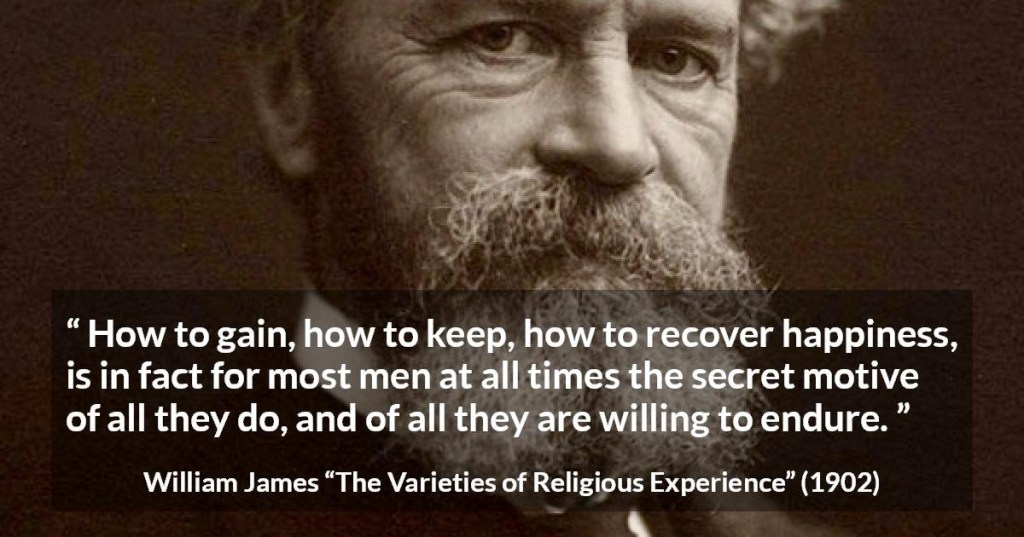
I’m a huge fan of the American philosopher William James, not least of all because he believed that knowledge without practical purpose was of little use. I’ll leave with this quote of his, which I think sums up the importance of joy and happiness perfectly:
“How to gain, how to keep, how to recover happiness is, in fact, for most men at all times the secret motive of all they do and of all they are willing to endure.“
William James “The Varieties of Religious Experience” (1902)
I hope you can find your own muddy puddle in life and enjoy the kind of contentment I experience.

 Paul Carney’s Blog
It would be great to hear your thoughts about this