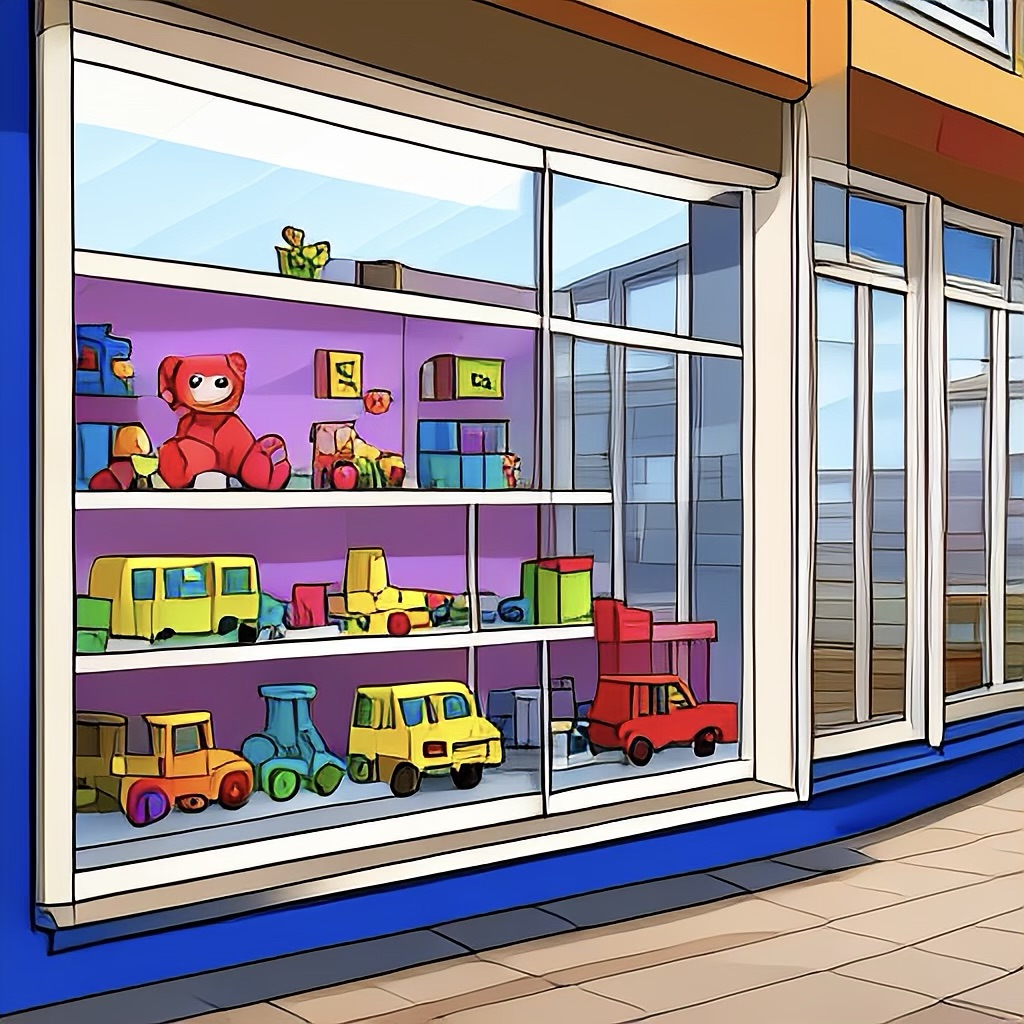
A man makes wooden toys. Every day he goes to his workshop, to lovingly craft and fashion his beautiful toys. He carefully displays them in his shop window, but no one ever buys them. Children say they don’t want wooden toys, they want electronic, plastic toys instead. Despite this, he continues every day to devotedly make his toys, refusing to compromise on his craft or alter how he makes them.
‘Kids these days don’t understand craftsmanship,’ he’d complain bitterly.
Year after year he continued making his toys, vainly hoping that one day, children will come to love them. But they never do, and in time he is reluctantly forced to give up. First, he sells the shop because he cannot afford to run it any longer. Then, the arthritis in his hands makes it too difficult to carve the wood, so he gives up his workshop. Not long after this he dies, in poverty, fading like one of the cheap, imported plastic toys he despised so much.
Soon after his death, his toys become hugely desirable. People begin to clamour for them, not only as toys to play with, but as items to put on display in expensive homes and galleries. In time, they sell for thousands, and then millions. His name becomes so familiar, it becomes a verb, synonymous with great beauty and craftsmanship. Learned people study his life, they learn about his methods and techniques, and produce detailed talks about him and the toys he made.
The Toymaker furiously watches these events from the afterlife and marches up to God in a rage: ‘I spent years and years of my life, lovingly making my beautiful toys but they didn’t sell and I died in poverty. Why wasn’t my work appreciated more when I was alive? It’s outrageous!’
God looks at him and smiles. ‘Didn’t you get my message? I told the children to tell you what toys they wanted.’

 Paul Carney’s Blog
It would be great to hear your thoughts about this