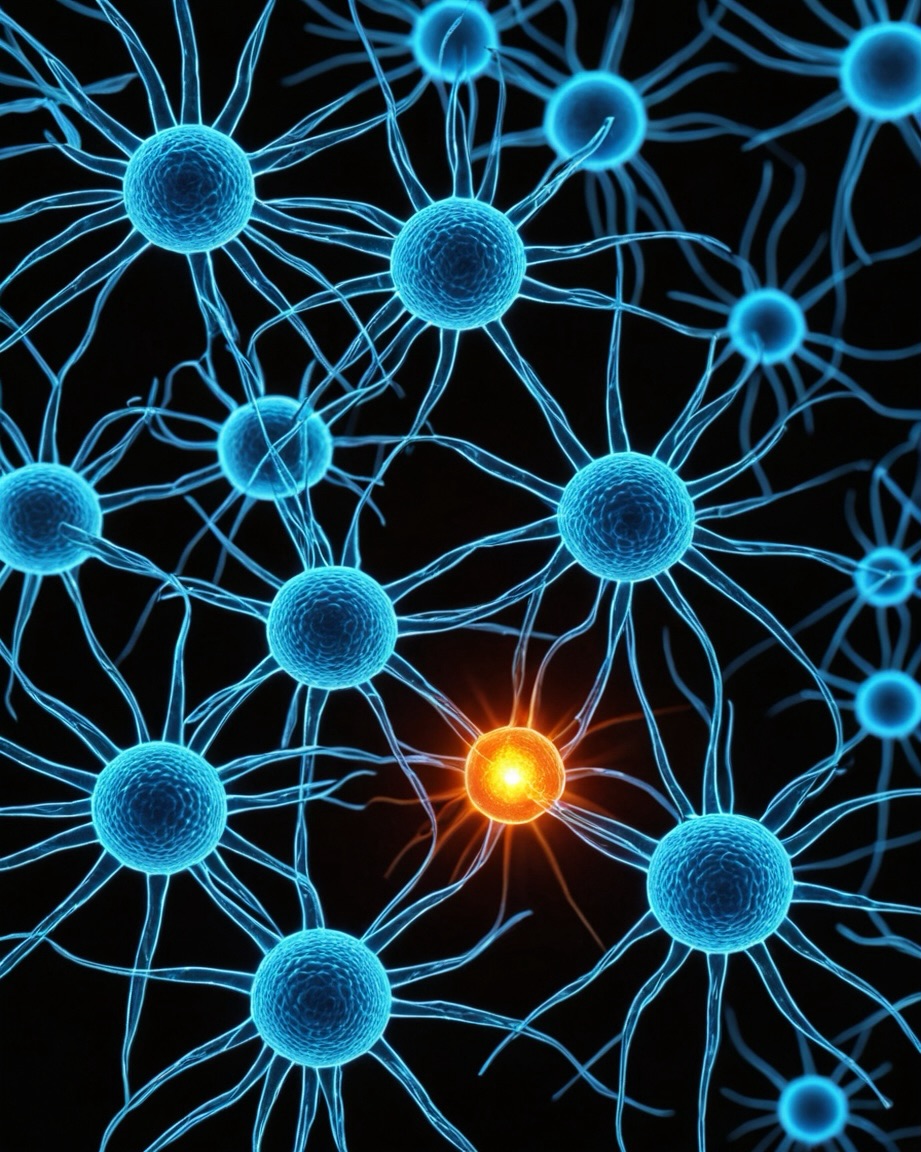
‘Wherever microbial life occurs, in the depth of the oceans and on arid mountain-tops, in scalding hot springs and on frigid glaciers, in fertile soils and desiccated deserts, inside and around our bodies, life is experimenting with every conceivable combination of new genes, rereading, editing, and rejuggling its metabolic texts without pause, yielding an enormous and still growing diversity of metabolisms’. Andreas Wagner, Arrival of the Fittest
Intro
Wherever it is encountered, life is imbued with an overarching drive and determination, and bound up in a creative will to achieve it. This drive, this force, pushes all life forward, apparently acting intuitively and spontaneously in the moment, frantically searching for innovations and new metabolisms. One gram of topsoil contains as many as ten billion microorganisms, that’s more people than there are on the planet, so life has a lot of diversity at its disposal. This creative life force competes with other organisms in a fight for survival, and much has been said about how life works, but not much has been said about why it works in this way. Why is life involved in this creative battle for survival? What is this self-determining agency we call life and where does it come from?
The bioelectric force that encompasses all living beings has been named the “electrome”.
Yes, friends are electric
From its discovery in 1953, scientists thought that DNA would finally unravel the mysteries of life. Here at last, it’s great secrets were laid bare – and it was wrapped inside the nucleus of cells of every living thing. Except, as the decades rolled by, big questions were left unanswered. Genes seemed to code for variants, but they didn’t define essential properties of an organism such as its morphology and behaviour. Genes were like ingredients, but they didn’t make the cake. The mysteries of life it seemed, had more aces up their sleeves. As Professor John Gerhart of Berkeley University and Marc Kirschner of Harvard have noted, there is an apparent paradox: “where we most expect to find genetic variation, we find conservation, a lack of change”.
Leading scientists are now developing new theories; that DNA on its own is not responsible for the huge variety of life, but also bioelectricity too. This revelation has a huge irony to it because bioelectricity has a long history. When Luigi Galvani lost his scientific battle with Alessandro Volta in 1795, it became a pseudoscience freak show. Promising scientific breakthroughs in this domain were pushed to one side due to mis-placed scepticism, and it has only been through the Herculean efforts of a few dogged scientists over the generations, that have kept it relevant.
Recent developments have shown that, although we do indeed have a ‘Vitalist’ life force, it is one that can absolutely be described by biological laws. In her book ‘the spark of life; electricity in the human body’, prominent biologist Frances Ashcroft outlines how ion channels underpin almost every aspect of an organisms behaviour; from their actions and inactions, to their likes, dislikes and preferences.
Ion channels are truly the ‘spark of life’ for they govern every aspect of our behaviour. From the lashing of the sperm’s tail to sexual attraction, the beating of our hearts, the craving for yet another chocolate, and the feel of the sun on your skin – everything is underpinned by ion channel activity. Frances Ashcroft.
And, as Sally Adee says in We Are Electric: The New Science of Our Body’s Electrome: ‘Evidence has begun to accumulate that the nervous system isn’t the only electrical system in organisms’. Electrical fields seem to operate at different frequencies in different types of cells; fat cells around -50 millivolts, skeletal muscle around -90, skin around -70 and stem cells at nearly 0. Put any type of cell in a Petri dish, apply an electric current and watch them crawl towards it.
‘It is for this reason that some scientists are beginning to think bioelectricity can be understood as a component of epigenetics – which describes how the environment can cause changes that alter the way your genes work without changing the actual DNA.’
Professor Michael Levin of Tufts University says, ‘Despite the progress of genetics and molecular genomics, DNA does not directly specify geometrical arrangements of tissues and organs, and so a process of encoding and decoding for morphogenesis is required. All cells, not only nerves and muscles, produce and sense electrical signals; in vivo, these processes form bioelectric circuits that harness individual cell behaviors toward specific anatomical endpoints’.
So it isn’t DNA that creates the endless varieties of forms and shapes found in nature, but bioelectricity.
Ultraweak photon emission
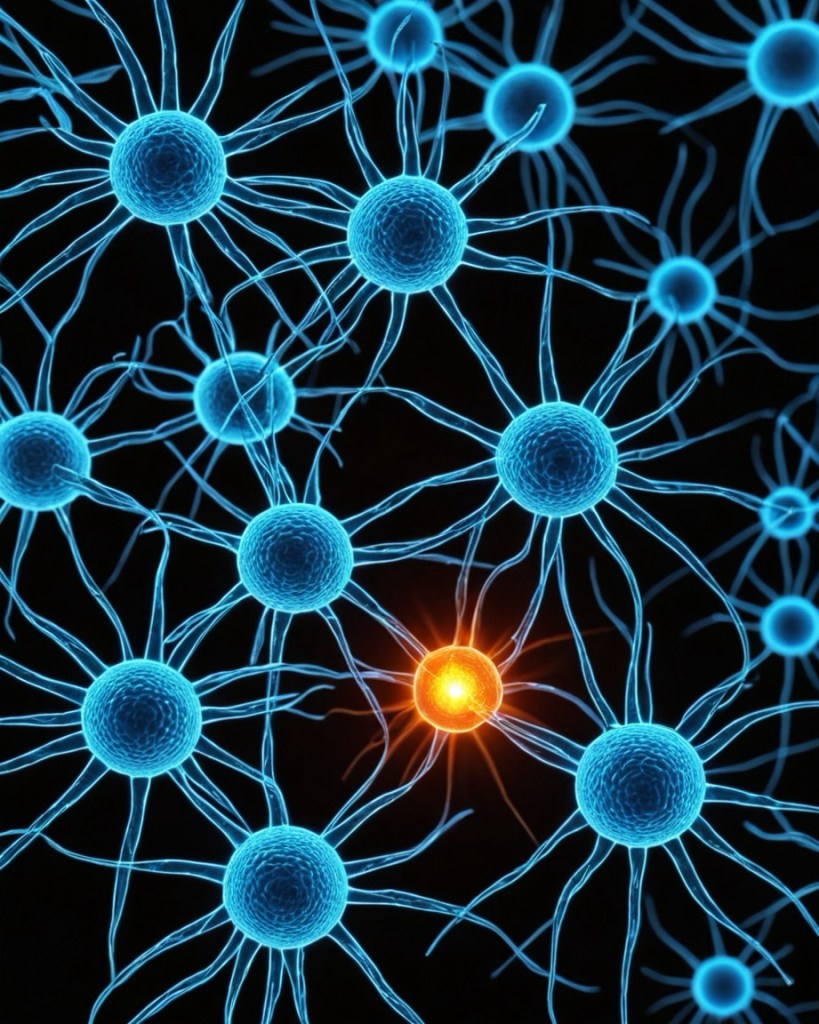
To compound this, research has also discovered that living organisms also emit light photos that fade when we die. Ultraweak photon emission (UPE, biophotons) is the spontaneous emission of ultraweak light emanating from all living systems. Research into the human biophoton has found it influences biological rhythms, and varies with age, health and gender.
Super grass
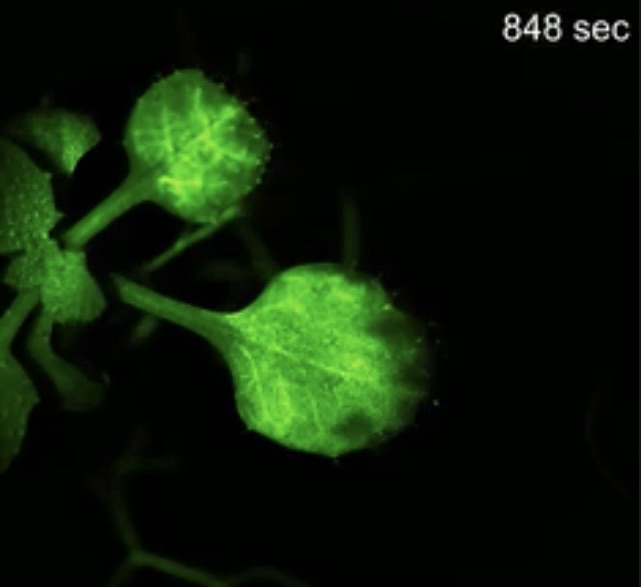
Bioelectrical potentials also occur naturally in plant tissues. They manage their internal processes and respond to their environment using electrical signals. In much the same way as biolelectricity works in human beings and animals, it is ion gradients operating across cell membranes that create this current. This electric current enables the plant to respond appropriately when it is injured or damaged. You experience this when you cut the grass. The grass’s cells rupture and smelly volatile organic compounds (VOCs) are released as a defence mechanism to signal to other plants they are under attack. Physiological responses created by electric currents, help the plants heal wounds, regrow, defend against pests and diseases, and to communicate with each other too. What’s even more incredible is that scientists have found neurotransmitters in plants, and discovered they can encode, store and retrieve basic short-term and long-term memory. They are able to retain information from prior experience and respond at a later time, for example when raising their leaves synchronously with the sun, or when producing new leaves.
Let there be rock
But it isn’t only living things that owe their dependency to bioelectric forces. The Earth’s magnetic field extends from its core into outer space, where it interacts with charged particles emanating from the sun. Because the core of the Earth is a molten fluid, the Earth’s rotation and its thermal convection currents create a geodynamo; an electric current that generates and maintains the Earth’s magnetic field. This magnetic field acts as a protective shield against solar radiation and plays a significant role in many life sustaining systems found on the Earth. The Earth’s magnetic field is not the same everywhere on earth. Typically, it is stronger at the poles and weaker at the equator, but there are also regional variations due to the distribution of magnetic minerals and areas with a high concentration of basalt.
Rock even has a memory! Many rocks, soils and sediments have strong magnetic fields and so they have the ability to memorise as many as a hundred previous stress states over time. Also, earthquakes are highly electromagnetic, and electromagnetic emissions coincide with acoustic emissions. Soil is electrically conductive too. The presence of ions in the soil indicate its ability to conduct electric currents and is an essential aspect of agriculture, as it provides information about its ability to transmit water and nutrients.
Life on Earth must have evolved from these electromagnetic forces, since all life carries bioelectrical signatures and behaves in accordance with the laws of electrodynamics. Stromatolite, the rocks in which the oldest fossilised remains of life has been found, is magnetically susceptible, and some of the earliest life forms – magnetotactic bacteria, oriented themselves along the magnetic field lines of earth’s magnetic field. The spark of life emanated from the oldest electromagnetic channels of the Earth.
Slime mold
So, where does all of this bioelectric energy come from? Well, since the Earth has such powerful electromagnetic fields, it follows that the universe must too. Electromagnetic radiation refers to the waves of the electromagnetic field, propagating through space and carrying electromagnetic radiant energy. It includes radio waves, microwaves, infrared, visible light, ultraviolet, X-rays, and gamma rays.
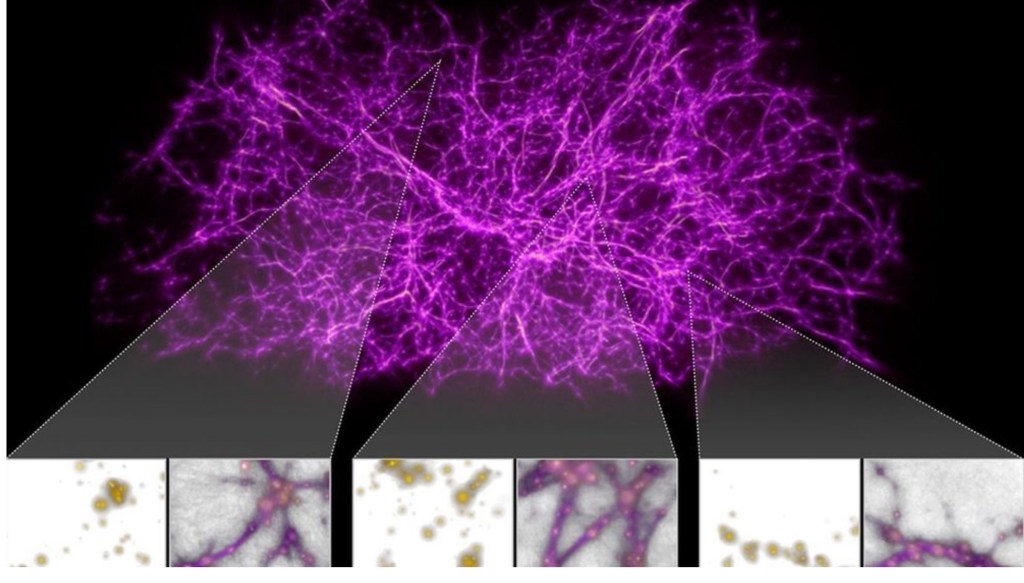
Bizarrely, the arrangement of galaxies in the universe is analogous to slime mould. NASA scientists have studied the ‘cosmic web’ – the arrangement of galaxies in a vast network of filaments, and found they cluster in the same manner that slime mould uses to capture new food. Now, this isn’t the same as saying the universe is actually a slime mould, or alive, or conscious, as some people have proposed, but the cosmic web does indicate that electromagnetic energy and the elements of life gather and flow along key routes, or filaments. Further to this, it’s been shown that the molecules of life on our planet, 14 of the amino acids that life on Earth uses to make proteins, and all five of the nucleobases that life on Earth uses in more complex biomolecules, have been found in asteroids. So, the same forces that propagated life on Earth permeate throughout the universe, travelling along filamented routes, in what has been likened to a living organism.
Curtain Call
The universe, our solar system, and the Earth itself, are all part of a singular organism, where the same universal properties that constitute life on Earth, are pumped around it in abundance, propelled by gravity and brought to life by electromagnetic forces and molecular interactions. In addition, the universe is cackling with a uniform residual thermal energy coming from Cosmic Microwave Background Radiation (CMBR) – the aftermath of the Big Bang. Originally, this radiation created some simple elements hydrogen, helium-4, and deuterium; life on Earth contains vast numbers of hydrogen atoms and these fundamental, life bringing molecules are constantly being produced and pumped around the universe.
The mechanisms have been known and observed for centuries, but bioelectricity has not been awarded due credence. In fact, it has been deliberately shunned by mainstream science because it did not fit with the accepted scientific picture, and so it was subsequently redeployed by pseudoscientists to make all manner of outrageous claims.
In part, the rebuttal of bioelectricity was due to a desire to keep science apart from religion – some scientists being intent on their own atheist agenda, which in my opinion has clouded impartial reasoning. The other explanation is more pragmatic. In 1952, Alan Hodgkin and Andrew Huxley published a paper that showed how sodium and potassium ions exchange places in cells to create an action potential. It won them the Nobel Prize and should have resulted in a deluge of scientific research, but alas, only a year later a certain Mr Crick and Mr Watson revealed the structure of DNA, and the main thrust of scientific investment went that way. It seems as though bioelectricity couldn’t catch a break.
Finally, I won’t go into the long, chequered history of teleology or electricity, from Ancient times, to Galvani and beyond, because others have done that, and I want to keep this as brief as I can. Nor do I want to discuss Organicism or Panphycism because they are philosophical viewpoints that cannot be described scientifically. But, I do believe that science is becoming increasingly aware that bioelectricity is the fundamental spark of life. All matter is atomic, therefore all matter has potential and kinetic energy. Chemical bonds in atoms are actually electrostatic interactions and so in this way, electrical forces underpin all matter. Electricity therefore, isn’t a curious by-product of life; it isn’t the circus freak show it was made out to be for hundreds of years – it literally is life itself and it is ubiquitous in the whole universe. Perhaps now we can reinstate electromagnetic energy as the bringer of life.
References
- Adee, Sally, We Are Electric: The New Science of Our Body’s Electrome
- Ashcroft, Frances, the Spark of Life
- Wagner, Andreas, Arrival of the Fittest
- Earth’s magnetic fields, Earth.com
- Y. j. Shang, Rock memory and intelligent computing of the excavation process in rock
- Levin, Michael, Tufts University, The bioelectric code: An ancient computational medium for dynamic control of growth and form
- Gerhart, John, Kirschner, Marc, Berkeley University, and Harvard evolutionary developmental biology
- Hamada, Masuda, Mitzatoni, Electromagnetic and acoustic emission associated with rock fracture
- SHIN-BIN R. CHANG, JOHN F. STOLZ, JOSEPH L. KIRSCHVINK, STANLEY M. AWRAMIK, Biogenic Magnetite in Stromatolites. II. Occurrence in Ancient Sedimentary Environments
- NASA, Mapping the Cosmic Web,
- Scientific American, Is consciousness part of the fabric of the universe
- NASA, NASA’s Asteroid Bennu Sample Reveals Mix of Life’s Ingredients
- Wikipedia: Organicism, Panphycism, teleology
- Lambda, cosmic microwave background radiation


 Paul Carney’s Blog
It would be great to hear your thoughts about this