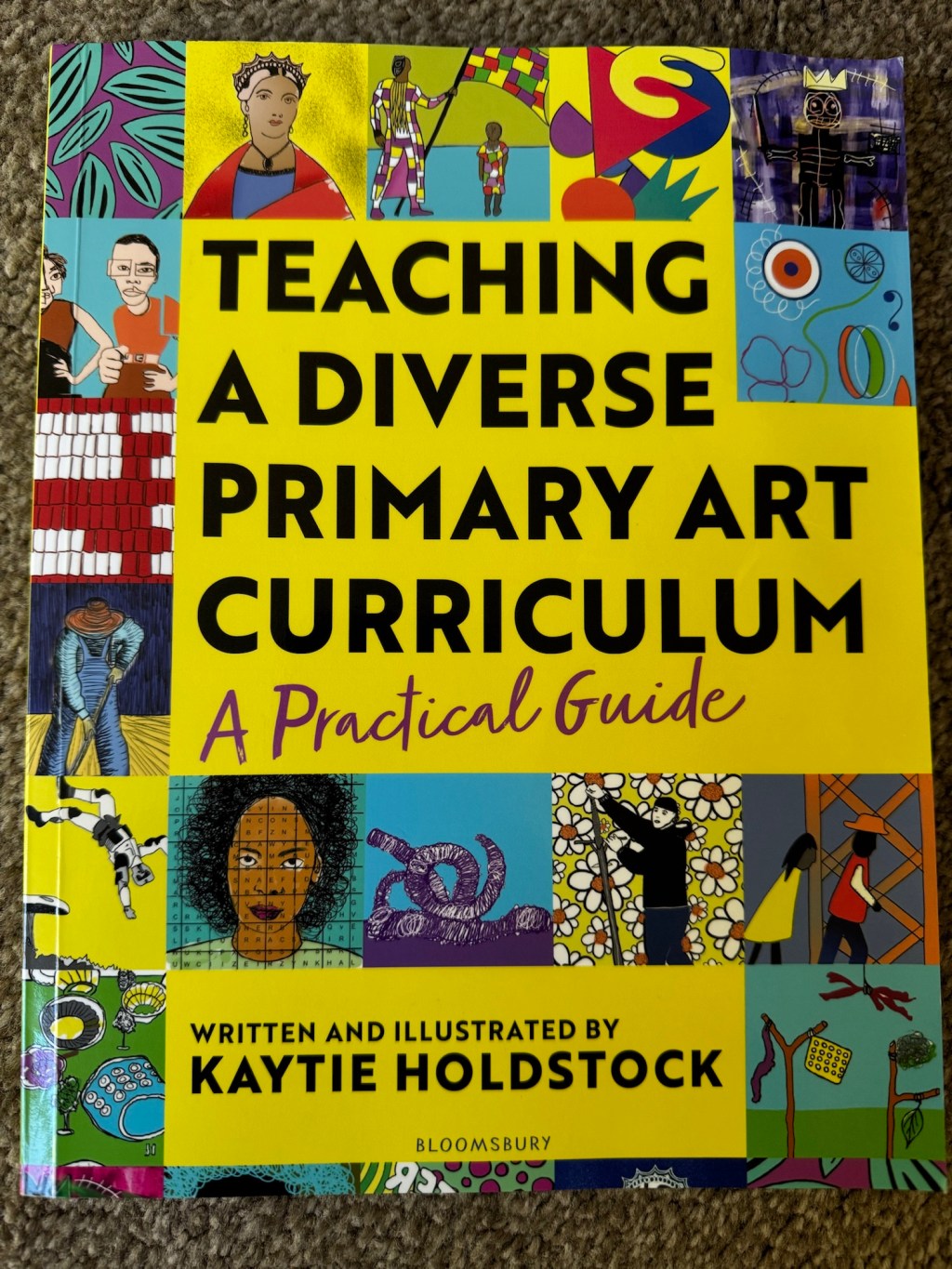
Teaching a diverse primary art curriculum, a practical guide written and illustrated by Kaytie Holdstock
Coming on the back of the Visualise: Race & Inclusion in Art Education report into diversity in art and design education, Kaytie Holdstock’s new book Teaching a Diverse Primary Art curriculum by Bloomsbury Education is a welcome and timely read.
The book outlines a whole plethora of primary art and design curriculum teaching ideas across numerous disciplines that will provide teachers with essential teaching material in time for the new school year. Each key stage phase is covered through 23 projects centred around key artists carefully chosen to represent a wide range of diverse and inclusive artists. As Kaytie explains, the thing is not to entirely replace artists from the existing art history canon, but to supplement them, so that pupils will “believe that art is for everyone”.
There are some nice touches in the book. I especially liked the way it is structured around an art expedition of six structural elements – enquire, experience, experiment, evolve, enjoy and evaluate, so that teachers can be sure that the teaching ideas contained in the book cover the mandatory aspects of the national curriculum in sufficient depth. Drawing, painting, sculpture, collage, photography, printing, and textile skills are all covered and there are some new, inventive project ideas linked to the artists’ work, as well as some more familiar ones that will give you the confidence to teach them well. Each chosen artist and project links to a deeper question that drives the project forward into the structural elements. This gives the activities an exploratory feel which is really fresh and open-ended.
“This is an excellent book that should not find itself on a teachers bookshelf, but rather be well thumbed, smudged with paint and dog-eared from constant use”.
I also loved the assessing pupils progress section which was concisely written yet very relevant and useful. The three C’s of control, confidence and creativity is a beautiful teaching idea that I think could be an essential component of a teachers toolkit and one that schools could build their assessment policy around.
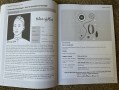
One of the limitations of the book is that, due to printing costs, it is a black and white book with illustrations of the artists work and hyperlinks rather than colour photos. As an author myself, I know that getting permissions for images from artists and galleries is extremely challenging, not to mention costly. While this does detract a little from the reading experience, I think the content of the book is strong enough to overcome these limitations. I would only urge teachers to get stuck into the projects themselves and try them out before teaching them. Only then will the true potential of the book reveal itself.
This is an excellent book that should not find itself on a teachers bookshelf, but rather be well thumbed, smudged with paint and dog-eared from constant use.
Paul Carney August 2024

 Paul Carney’s Blog
It would be great to hear your thoughts about this